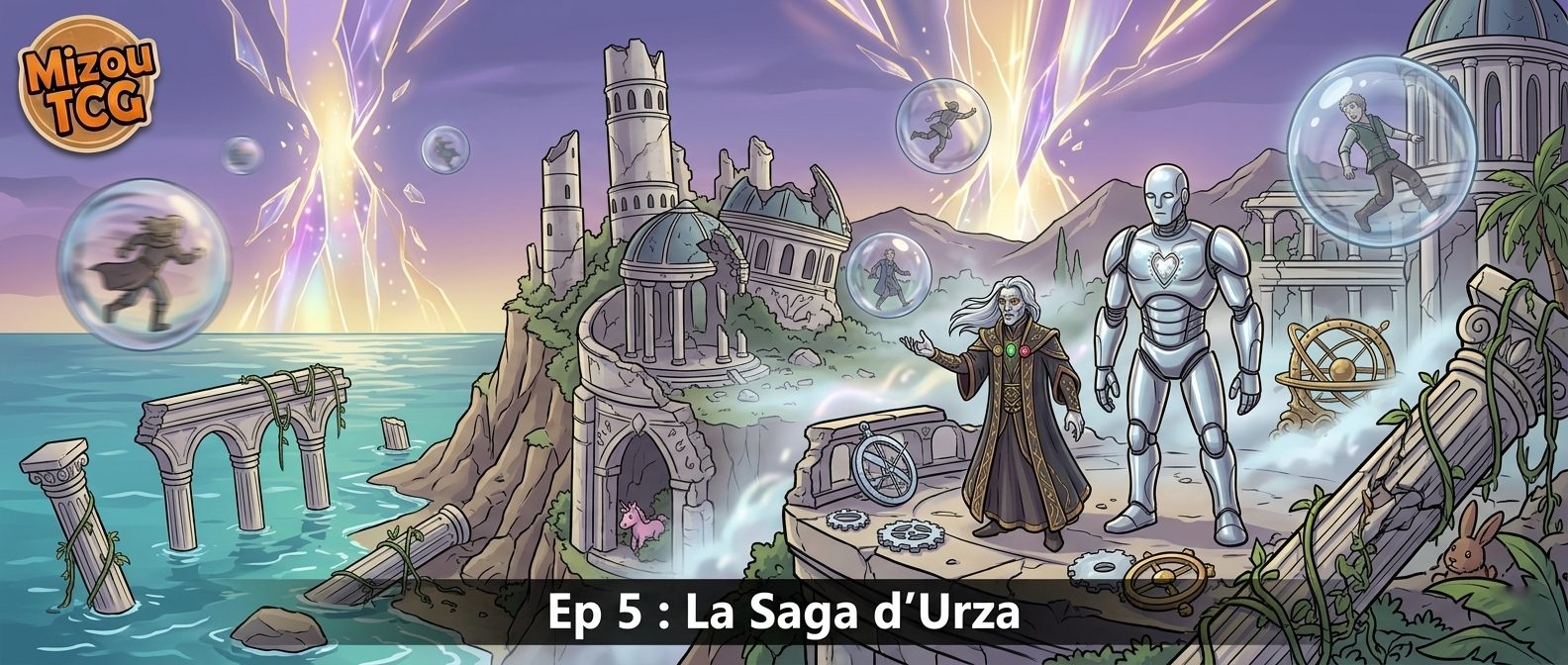
- The awakening of a broken god
- The survivor's madness
- Xantcha: the unlikely ally
- A Phyrexian who refused Phyrexia
- The heart-stone
- Serra's Realm: paradise lost
- A perfect artificial plane
- The worm in the fruit
- Tolarian Academy: the laboratory of time
- Master Malzra and his recruits
- The temporal experiments
- Karn: the silver golem
- The birth of a consciousness
- Jhoira and Teferi
- The Tolarian Time Disaster
- The invasion and the fateful decision
- The temporal explosion
- A creator's guilt
- The Legacy and the Weatherlight
- A ship between worlds
- The sacrifice of Serra's Realm
- Assessment: the price of preparation
- In the next episode...
- Sources
- Products related to this episode
- Products - La Guerre Fratricide
The Sylex explosion had destroyed everything. Argoth was nothing but a smoking crater, his brother Mishra lay in pieces of flesh and metal, and Dominaria's climate was tilting toward an ice age that would last millennia. But at the heart of this cataclysm, something extraordinary had happened: Urza's planeswalker spark had awakened.
Welcome to episode 2 of our exploration of Magic: The Gathering lore. Today we follow Urza through his travels across the Multiverse — an odyssey marked by madness, guilt, and one obsession: destroying Phyrexia. This quest will lead him to create wonders... and catastrophes.
The awakening of a broken god
Urza did not wake up as a triumphant hero. He woke up as a monster. The Mightstone and the Weakstone, the two halves of the stone that had sealed Phyrexia millennia earlier, had fused with his skull, replacing his eyes. Through these gems, he could now see the Multiverse in all its terrifying immensity.
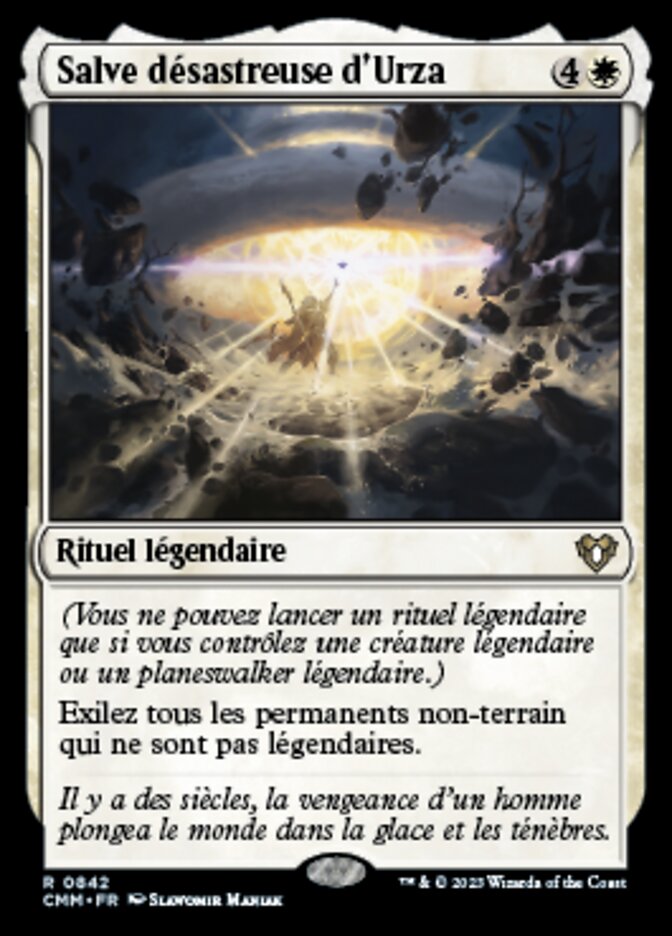
The survivor's madness
Urza's first years as a planeswalker were marked by deep mental instability. He had killed his own brother. He had discovered that Mishra had not been human for years — that a Phyrexian monster had taken his place. Worse, he now realized that his entire war, thirty-six years of carnage, had only served to weaken Dominaria against the true threat.
Urza wandered the Multiverse aimlessly, fleeing his memories. He spent decades on some planes, seconds on others. Time had lost all meaning for an Oldwalker — those quasi-divine beings who did not age, whose body was merely a projection of their will.
During this dark period, an obsession grew within him: understand Phyrexia. Not to make peace. To destroy it, down to the last drop of black oil.
Xantcha: the unlikely ally
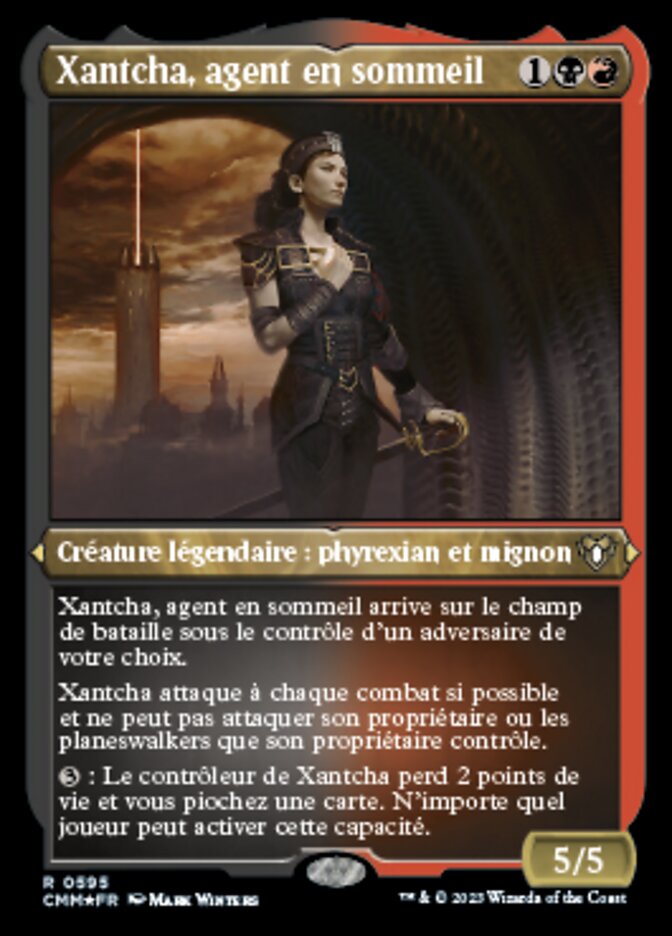
It was in the depths of Phyrexia itself that Urza found his first true ally. During one of his suicidal incursions into the mechanical plane, he encountered a unique creature: Xantcha.
A Phyrexian who refused Phyrexia
Xantcha was what Phyrexians called a "newt" — a sleeper agent, created to resemble a human and infiltrate civilizations ahead of the invasion. But something had gone wrong in her creation. Instead of blind loyalty to the Father of Machines, Xantcha had developed an individuality.
She hated Phyrexia. She hated what she was. And when she met Urza, mad with rage and pain, she saw an opportunity: someone capable of doing what she could not do alone.
For centuries, Xantcha accompanied Urza in his travels. She became his anchor — the voice of reason when his madness threatened to consume him. She taught him everything she knew about Phyrexia: its nine-sphere structure, its factions, its weaknesses.
But above all, she gave him something he had lost since Mishra's death: a reason to live beyond vengeance.
The heart-stone
At the center of Xantcha's chest lay her heart-stone — a Phyrexian artifact that gave her life and consciousness. Without it, Xantcha was just an empty shell. This stone would later become the crucial element in the creation of someone else...
Xantcha died fighting the demon Gix, the same Phyrexian praetor who had corrupted Mishra centuries earlier. Her death broke something in Urza — but she also left him a legacy: her heart-stone, and the certainty that even Phyrexia's creations could choose freedom.
Serra's Realm: paradise lost
Wounded in soul and body after a disastrous confrontation with Phyrexia, Urza sought refuge. He found it in one of the most beautiful planes ever created: Serra's Realm, the kingdom of the planeswalker Serra.
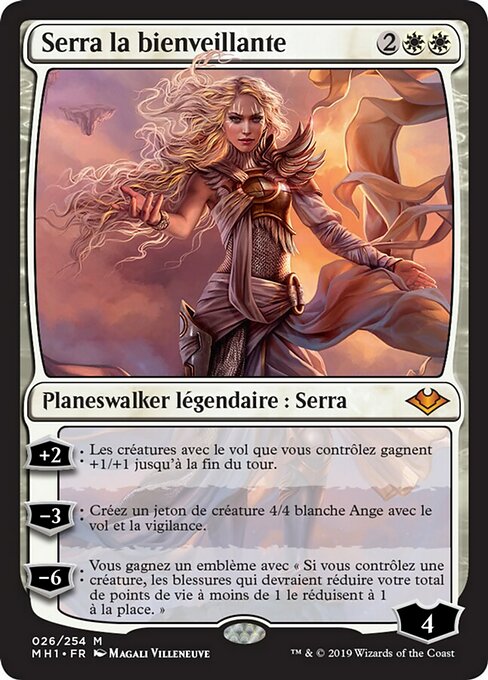
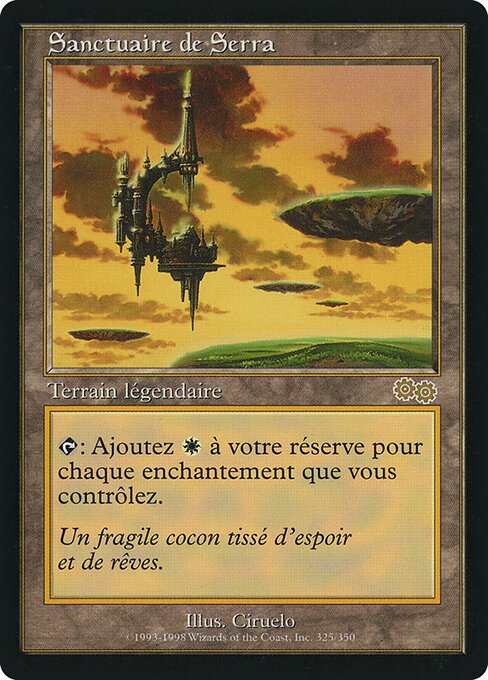

On the left, Serra the Benevolent — an Oldwalker of immense power, who had chosen to use her power to create rather than destroy. In the center, Serra's Sanctum, the spiritual heart of her artificial plane. On the right, a Serra Angel, one of the countless winged creatures she had fashioned from pure white mana.
A perfect artificial plane
Serra's Realm was an artificial plane — an entire reality created by the will of a single planeswalker. Unlike natural planes like Dominaria, it required constant maintenance. Serra devoted part of her essence to maintaining the balance.
The kingdom was a utopia of light, order, and peace. Crystal cathedrals rose toward eternally golden skies. Angels watched over human communities living in harmony. No disease, no war, no suffering.
Urza spent five years there healing — an eternity for a mortal, a blink for an Oldwalker. Serra cared for him patiently, seeing in him not a hero but a broken being who deserved compassion.
The worm in the fruit
But Urza could not stay. His war against Phyrexia was not over. When he left Serra's Realm with Xantcha, he did not know he was dooming the paradise.
The Phyrexians had followed him. They had traced his passage through the Blind Eternities. Shortly after his departure, a Phyrexian invasion force attacked Serra's Realm.
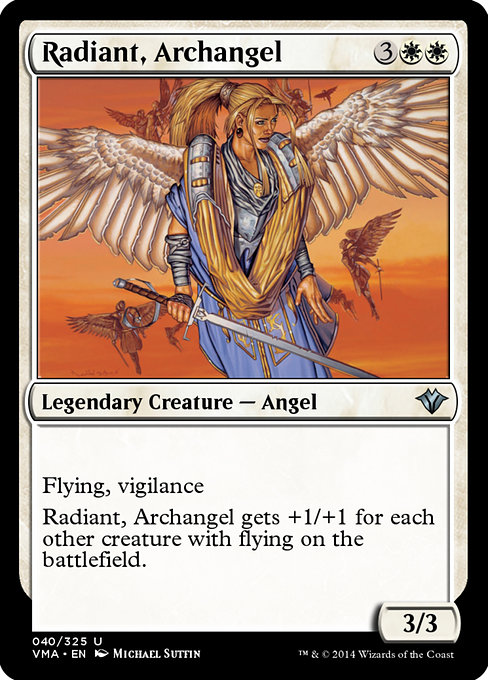
Serra, her heart broken by this corruption of her perfect work, abandoned her kingdom. She could no longer bear to see the Phyrexian black mana defile what she had created with such love. She left her archangel Radiant in charge and fled to Dominaria.
This was a fatal mistake. Without Serra to maintain the balance, the plane began to deteriorate. Worse still, Phyrexian sleeper agents manipulated Radiant, pushing her toward paranoia and tyranny. The utopia became a nightmare.
Serra herself died on Dominaria, assassinated by a black-aligned planeswalker. She could have healed herself, but her will to live had been extinguished with her kingdom. Paradise was dead — and it was Urza's fault.
Tolarian Academy: the laboratory of time
Xantcha's death and the destruction of Serra's Realm could have broken Urza definitively. Instead, they focused him. He understood he could not defeat Phyrexia alone, or even with a few allies. He needed an army. He needed time.
On the island of Tolaria, off the coast of Dominaria, Urza founded what would become the greatest magical and scientific institution in the Multiverse: the Tolarian Academy.

Master Malzra and his recruits
Urza did not reveal his true identity. Under the alias "Master Malzra", he gathered the greatest talents of Dominaria: artificers, mages, mathematicians, biologists. All recruited for a single purpose — one they were unaware of: preparing for war against Phyrexia.
Among his most important recruits:
- Barrin — An archmage of exceptional power, who became Urza's right hand and moral conscience. He constantly questioned the increasingly extreme methods of his mentor.
- Rayne — A brilliant scholar who married Barrin and became the Academy's chief historian.
- Teferi — An arrogant young prodigy, whose talent for temporal magic matched his lack of discipline.
- Jhoira — A patient and observant Ghitu student, who would become one of the most important figures in Dominaria's history.
The temporal experiments
Urza's secret project was time travel. If he could master temporal flows, he could accomplish decades of research in a matter of days. He might even be able to correct the past — prevent the brothers' war, save Mishra before his corruption.
But manipulating time is dangerous. Even for an Oldwalker.
The early experiments used temporal bubbles — zones where time flowed differently. Inside a "fast" bubble, a researcher could accomplish years of work in a few hours. Inside a "slow" bubble, he could observe instantaneous phenomena in slow motion.
But Urza wanted more. He wanted to travel through time, not just slow it down or speed it up. For that, he needed a probe capable of crossing temporal energies without being destroyed.
He needed Karn.
Karn: the silver golem

Urza discovered that only silver could cross temporal flows without damage. He therefore built a golem made entirely of silver — a machine capable of traveling into the past and bringing back information.
But Urza wanted more than a simple machine. He wanted a being capable of thinking, of adapting, of making decisions. For this, he implanted at the golem's core the most precious artifact he possessed: Xantcha's heart-stone.

The birth of a consciousness
The result surpassed all of Urza's expectations. Karn was not an obedient machine — he was a conscious being. Xantcha's heart-stone had transmitted something unexpected to him: the capacity to feel.
Karn could experience joy, sadness, fear, love. He could learn, grow, evolve. And very quickly, he developed his own philosophy — a philosophy radically different from that of his creator.
Where Urza saw only war, Karn chose pacifism. Where Urza sacrificed lives for his objectives, Karn refused to harm anyone. This conflict between creator and creation would mark their entire relationship.
Jhoira and Teferi
Karn's early days at the Academy were not easy. Young Teferi, arrogant and mocking, nicknamed him "Arty Shovelhead" and treated him as a simple tool. But one student saw beyond the metallic exterior.
Jhoira recognized Karn's nascent humanity. She took him under her wing, taught him, spoke to him as an equal. She was the one who gave him his name — "Karn," a Thran word meaning "powerful" or "strong".
Their friendship became Karn's first genuine emotional bond. Jhoira would be his closest friend for millennia — a constant in a tumultuous existence.
The Tolarian Time Disaster
The time travel experiments were progressing. Karn carried out several missions into the past — first a few minutes, then a few hours, then a few days. Everything seemed to be working.
Then the Phyrexians attacked.
The invasion and the fateful decision
Phyrexian agents had infiltrated the Academy. In a coordinated attack, they killed dozens of students and professors. Among the victims: Jhoira.
Karn, desperate, begged Urza to send him back in time to prevent the attack. Urza agreed — perhaps out of compassion for his creation, perhaps out of scientific curiosity. He sent Karn a few hours into the past.
Karn succeeded. He alerted the Academy, the Phyrexians were repelled, Jhoira survived. But the price was apocalyptic.
The temporal explosion
The temporal vortex absorbed too much energy. The machine exploded.
The detonation was not merely physical — it tore the very fabric of time across Tolaria. Hundreds of people died instantly. The Academy was devastated. And the island found itself covered with permanent temporal distortions.
Zones where time flowed a thousand times faster — entering meant aging by decades in seconds. Others where it flowed infinitely slowly — bubbles where victims of the explosion remained frozen for eternity, conscious but unable to move.
These cards illustrate the horrors of the Time Disaster. On the left, a Temporal Fissure — the tears in time that dotted Tolaria. In the center, Slow Motion that trapped victims. On the right, the permanent Temporal Distortion that made the island uninhabitable.
A creator's guilt
For Urza, this was the Sylex all over again. Once again, his quest for power had caused a catastrophe. Once again, innocents had died because of him.
But unlike the Brothers' War, Urza did not collapse. He had learned something crucial: the temporal distortions, though dangerous, could be exploited. A researcher equipped with special armor could enter a fast time bubble and accomplish decades of work in a few hours.
Urza rebuilt the Academy. Larger. More powerful. More focused than ever on one single objective: creating the weapons needed to destroy Phyrexia.
The Legacy and the Weatherlight
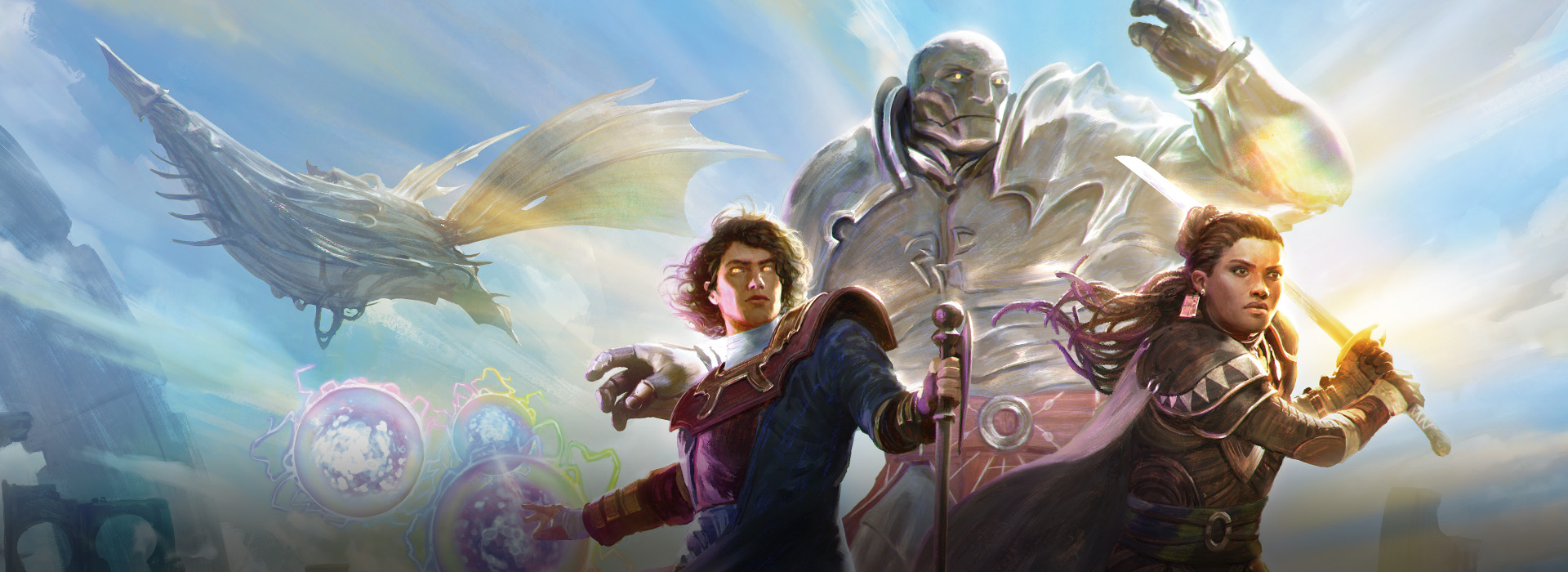
The following decades saw Urza develop his ultimate plan: the Legacy. A set of interconnected artifacts, each forged with a precise purpose, which together would form a weapon capable of destroying Yawgmoth himself.
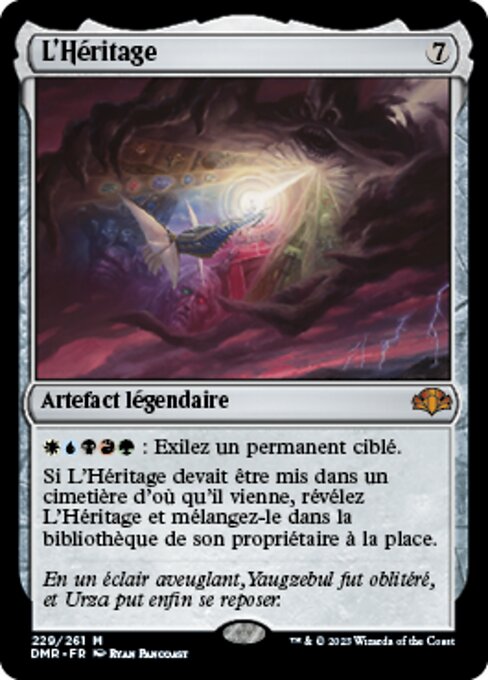
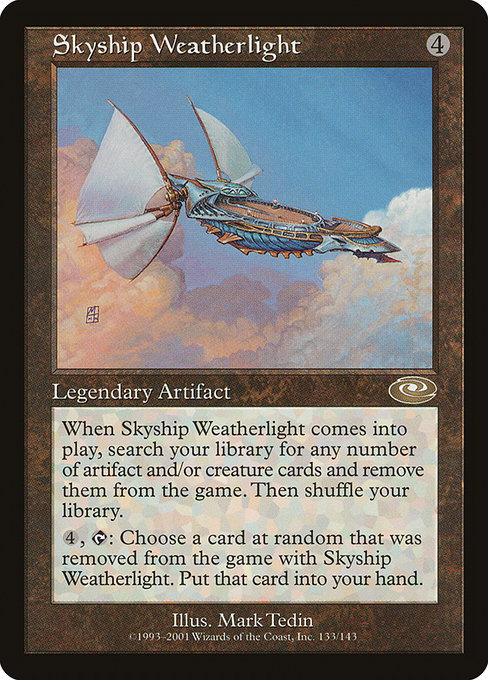
On the left, the Legacy Weapon — the final form of all the assembled components. In the center, the Weatherlight, the flying ship that would transport the Legacy. On the right, the Weatherseed, the living heart of the ship, a gift from the forest of Yavimaya.
A ship between worlds
The Weatherlight was the jewel of the project. A ship capable of flying at supersonic speeds, but also of traveling between planes — a capability normally reserved for planeswalkers.
Its hull was made of Thran metal recovered from the ruins of the ancient civilization. Its heart was the Weatherseed, a living artifact offered by the spirits of the Yavimaya forest. But to power its engines required a colossal amount of energy.
The energy of an entire plane.
The sacrifice of Serra's Realm
Urza knew Serra's Realm was doomed. Without Serra to maintain it, the artificial plane was slowly collapsing. The Phyrexians had corrupted it from within. Radiant had become a tyrant manipulated by enemy agents.
He made a terrible decision: to use the energy of Serra's Realm's collapse to power the Weatherlight.
The mission was entrusted to Jhoira, now captain of the Weatherlight, and Karn. They entered Serra's Realm as it was collapsing, saving as many refugees as possible — angels and humans fleeing the destruction of their world.
Then Urza triggered the Planar Collapse. The energy of an entire universe was channeled into the Weatherlight's mana battery. Serra's Realm ceased to exist — but the ship was now capable of traveling between planes.
The survivors were settled on Dominaria, in a region that would become New Benalia. They built cathedrals there in memory of Serra, perpetuating her legacy even after her death.
Assessment: the price of preparation
At the end of this era, Urza had accomplished the impossible. He had created the tools necessary to confront Phyrexia: an academy training the best minds, a conscious golem capable of carrying the Legacy, a ship capable of crossing planes.
But at what price?
On the left, Urza as Lord Protector — the title he bore at the Academy, concealing his true identity as a planeswalker. In the center, Karn Liberated — the golem who had transcended his function as a tool to become a being in his own right. On the right, Jhoira, Weatherlight Captain — the student who became a hero.
- Xantcha had died fighting Gix
- Serra's Realm had been destroyed, its inhabitants uprooted
- Serra herself had died, her heart broken
- The Tolarian Academy had been devastated, hundreds dead
- Dominaria still bore the scars of the ice age caused by the Sylex
Had Urza saved the Multiverse? No, not yet. He had prepared it — by sacrificing everything he touched. Every victory came with a terrible cost. Every advance left the dead behind.
And the worst was yet to come. For the Legacy was not merely a set of artifacts. It also included a living component — a hero destined to wield it. Urza had spent generations manipulating bloodlines, crossing families to create the perfect warrior.
His name would be Gerrard Capashen. And his fate would be to bear the burden of Urza's Legacy.
In the next episode...
Episode 3: The Weatherlight Crew
A legendary ship. A crew of unlikely heroes. A quest across the planes to gather the pieces of the Legacy. Meet Gerrard, the warrior with a tragic destiny; Sisay, the indomitable captain; Hanna, the brilliant navigator; and Squee, the luckiest goblin in the Multiverse. Together, they will form the crew that faces Phyrexia — and many of them will not return.
Sources
- Planeswalker (novel by Lynn Abbey, 1998) — Urza's travels with Xantcha
- Time Streams (novel by J. Robert King, 1999) — The founding of Tolarian Academy and Karn's creation
- Bloodlines (novel by Loren L. Coleman, 1999) — Urza's eugenics project
- Urza's Saga (expansion, 1998) — Cards illustrating this period
Products related to this episode
Relive this saga with cards from the corresponding expansions:
Products - La Guerre Fratricide