- The Multiverse: an infinity of worlds
- Planes: isolated universes
- The Elder Dragons: the first beings
- The Elder Dragon War
- Nicol Bolas and Ugin: the twins
- The awakening of the sparks
- The Thran Empire: greatness and decadence
- Masters of artifacts
- Phthisis: the price of progress
- Yawgmoth: the birth of absolute evil
- Exile and return
- Intrigues at court
- The discovery of Phyrexia
- The nine spheres of hell
- The fall of the Thran Empire
- The Brothers' War: the fate of Urza
- The discovery of the stones
- A total war
- The Sylex Blast
- The Oldwalkers: mortal gods
- Summary: the foundations are laid
- In the next episode...
- Sources
- Products related to this episode
- Products - La Guerre Fratricide
More than 25,000 years ago, before humans, before civilizations, stone-eggs fell from the sky onto a world called Dominaria. From these eggs were born the Elder Dragons — the first conscious beings of the Multiverse. Among them, two twins: Nicol Bolas and Ugin, whose rivalry would shape the history of the universe.
Welcome to the first episode of our exploration of the Magic: The Gathering lore. Today, we go back to the very origins of existence: the birth of the Multiverse, the first planeswalkers, and the creation of the threat that would haunt the Multiverse for millennia — Phyrexia.

The Multiverse: an infinity of worlds
The Magic universe is not a single world. It is a Multiverse — an infinity of planes of existence, each a complete universe with its own physical laws, its own magic, and its own inhabitants.
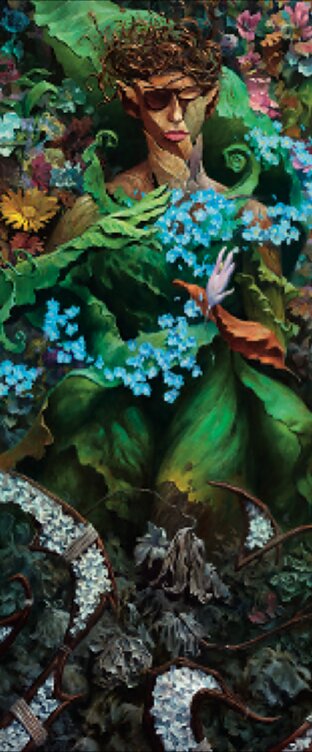
Planes: isolated universes
Each plane is a bubble of reality floating in an ocean of chaos called the Blind Eternities. This primordial chaos is lethal to any ordinary living being — venturing into it means instant death, disintegrated by the raw energies of inter-planar space.
Planes are completely isolated from one another. An inhabitant of Dominaria will never know that Ravnica exists. An elf from Zendikar will die without knowing Innistrad. This isolation is absolute... except for a very rare few.
Among the most important planes:
- Dominaria — The "original" plane, a natural nexus between all others. This is where most of Magic's ancient history unfolds.
- Ravnica — A city-world governed by ten guilds, where every centimeter is urbanized
- Innistrad — A gothic world haunted by horror, inspired by classic horror films
- Zendikar — A wild plane with unstable landscapes, where the very land seems alive
Only planeswalkers — exceptional beings endowed with a "spark" — can cross the Blind Eternities and travel between these worlds. The spark is innate: you are born with it, or not. It awakens generally during intense trauma — a near-death experience, a devastating emotional shock. And in the era we are speaking of, planeswalkers were not merely powerful mages. They were gods.
The Elder Dragons: the first beings
Long before humans, long before any civilization, the first conscious beings of Dominaria were the Elder Dragons. Their origin is shrouded in mystery. According to legend, they were born from the Ur-Dragon, a conceptual entity that transcends the planes themselves.
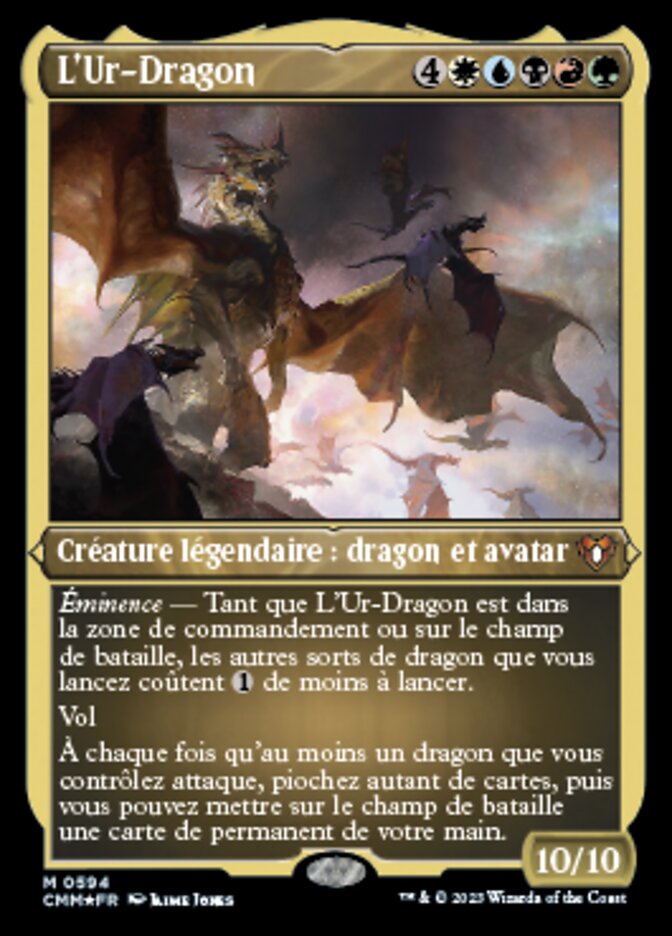
The Ur-Dragon is not a creature one can meet or fight. It is a conceptual entity — the platonic idea of the dragon, of which all dragons in the Multiverse are imperfect reflections. When the Ur-Dragon "flies" through the Multiverse, its passage leaves traces: stone-eggs that fall on the worlds it flies over.
On Dominaria, these eggs gave birth to several Elder Dragons, the most famous being: Arcades Sabboth, Chromium Rhuell, Nicol Bolas, Palladia-Mors, Vaevictis Asmadi, and Ugin, the twin brother of Bolas. Each possessed unmatched intelligence and magical power.
The Elder Dragon War
The Elder Dragons did not live in peace. They quarreled over territory, resources, and above all power. Nicol Bolas, the most ambitious of them, dreamed of total domination.
A war broke out — a war between gods. The Elder Dragons fought for centuries, devastating entire continents. Nascent human civilizations were swept away like ants underfoot of titans.
At the end of this war, only five Elder Dragons survived. The others were killed or transformed into "normal" dragons — powerful but mortal creatures, stripped of the divine intelligence of their ancestors. Among the survivors: Nicol Bolas and his twin brother Ugin.
Nicol Bolas and Ugin: the twins
Among all the Elder Dragons, two were unique: Nicol Bolas and Ugin, the only twins ever born from the same egg. Unlike their massive brothers and sisters, they were smaller, more frail. But this physical weakness pushed them to develop their intelligence far beyond the others.
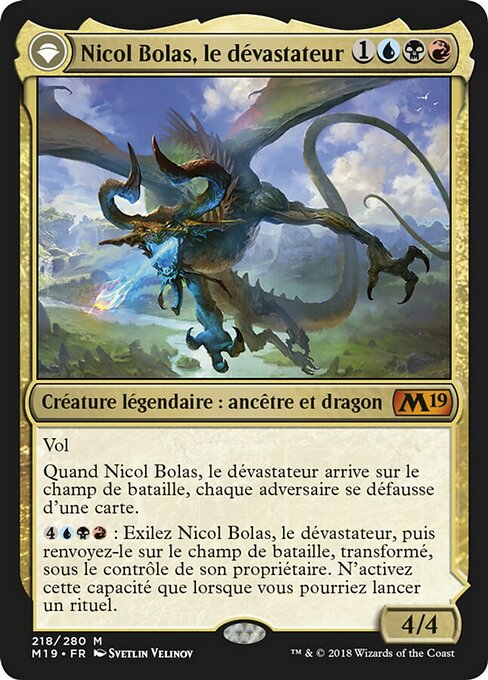
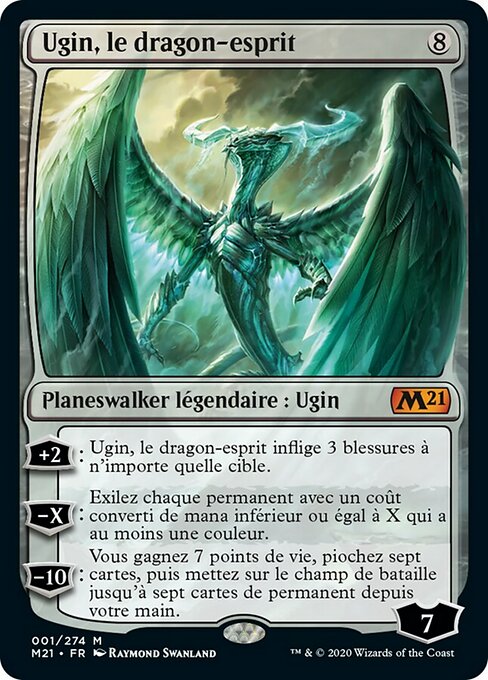
Despite their common origin, the twins could not have been more different:
- Nicol Bolas (left) — Ambitious, cruel, power-hungry. From a young age, Nicol understood that brute force was not enough. He learned to manipulate. He helped stoke tensions among his brothers and sisters, exploiting the Elder Dragon War to eliminate rivals while remaining in the shadows. When the dust settled, Bolas had eliminated his rivals without dirtying his claws. He is the first of dragons, the oldest, the most cunning. This card shows his dragon form on Dominaria, before he reached his full potential.
- Ugin (right) — Wise, contemplative, a seeker of truth. Where Nicol saw only tools to exploit, Ugin saw mysteries to understand. He spent millennia meditating, studying mana flows, contemplating the universe. His body became translucent, colorless, as he transcended the limitations of the five colors of mana. He was the first to sense that something existed beyond Dominaria...
The awakening of the sparks
One day, Ugin discovered the unthinkable: Dominaria was not the only world. Other planes existed, an infinity of universes separated by the Blind Eternities. This revelation was so earth-shattering that his planeswalker spark awakened. Ugin became the first of the twins to travel between worlds.
When he returned to share this discovery with his brother, Nicol's reaction was... unexpected. Learning that his conquests on Dominaria meant nothing on a cosmic scale — that he was merely a fish in a pond while believing himself master of the ocean — this humiliation was unbearable.
Bolas's rage was so intense, so absolute, that his own spark awakened in a torrent of fury. At that moment, two of the most powerful beings in the Multiverse were born. Their rivalry would last millennia.
The Thran Empire: greatness and decadence
Millennia passed. The surviving Elder Dragons vanished into the shadows, roaming the Multiverse or sleeping in hidden refuges. On Dominaria, humans built civilizations, destroyed them, and built new ones.
Until one civilization surpassed all others: the Thran.

Masters of artifacts
The Thran did not merely master magic — they had industrialized it. Where other civilizations relied on individual mages, the Thran created machines capable of channeling mana automatically.
Their capital, Halcyon, was a marvel of engineering. Crystal towers rose toward the clouds, connected by bridges of solidified light. Servant golems performed menial tasks. Flying vehicles crossed the sky. And at the heart of everything: the Powerstones.
Powerstones were crystals capable of storing immense quantities of mana. A single stone could power an entire city for decades. The Thran Empire produced them by the thousands. Their power seemed limitless.
But this greatness hid a mortal weakness.
Phthisis: the price of progress
A mysterious disease began to spread among the Thran. It was called Phthisis — a progressive degeneration that caused organs to rot from within. The first symptoms were mild: fatigue, cough. Then bones became fragile, skin was covered with lesions, and finally... death.
The empire's best doctors searched for a cure. In vain. Phthisis was incurable. Worse still, it seemed to strike particularly those who worked near the Powerstones. The source of the Thran's greatness was also the cause of their decline.
The ruling council of Halcyon was desperate. Then they were told of an exiled physician, a genius with radical methods, banished for experiments deemed unethical. His name: Yawgmoth.
Yawgmoth: the birth of absolute evil
Yawgmoth was not born a monster. He was a visionary — a man convinced that traditional medicine was limited, that one had to go further to truly heal humanity.

Exile and return
Before his recall, Yawgmoth had been exiled for his experiments on the Eumeans, a humanoid race considered inferior by the Thran. He had used them as test subjects, testing radical surgical procedures, transplanting organs, grafting mechanical prosthetics onto living flesh.
The council had banished him. But faced with Phthisis, they could no longer afford the luxury of ethics.
Yawgmoth returned to Halcyon as a hero. He studied the disease and made a crucial discovery: Phthisis was caused by radiation from the Powerstones. The Thran were poisoning themselves with their own technology.
His "cure" was simple and terrifying: replace diseased organs with mechanical prosthetics. Artificial lungs. Mechanical hearts. Metal limbs. The patients survived — but they were no longer quite human.
Intrigues at court
Yawgmoth did not merely heal. He maneuvered. He gained the trust of Rebbec, the empire's most brilliant architect, married to the artificer Glacian. When Glacian fell ill with Phthisis, Yawgmoth became his personal physician — and began to insinuate himself into his relationship with Rebbec.
He cultivated allies, eliminated opponents, and was preparing something far greater than a simple medical remedy. He dreamed of a world where disease, weakness, death itself would be abolished. A perfect world. A world he would control.
He just needed a place to build this world...
The discovery of Phyrexia
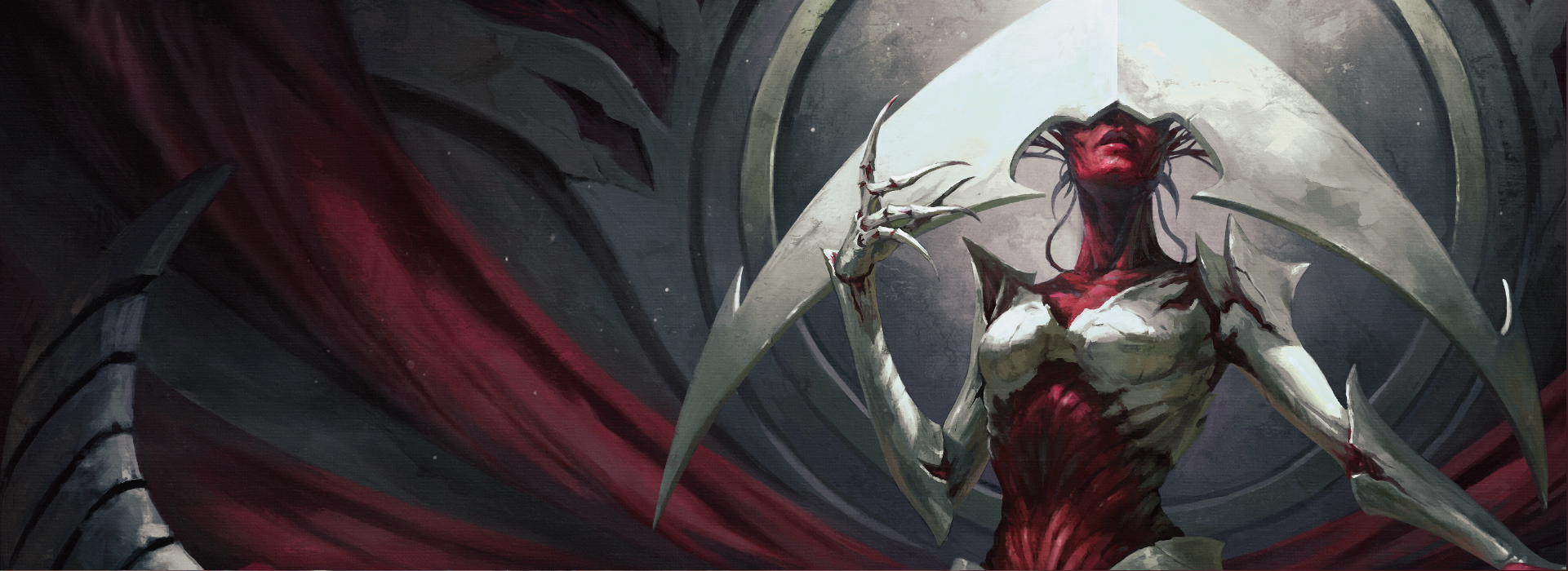
A planeswalker named Dyfed crossed paths with Yawgmoth. Fascinated by his intellect, she made the fatal mistake of revealing the existence of other planes to him. She took him on a tour of the Multiverse — and eventually showed him an abandoned artificial plane.
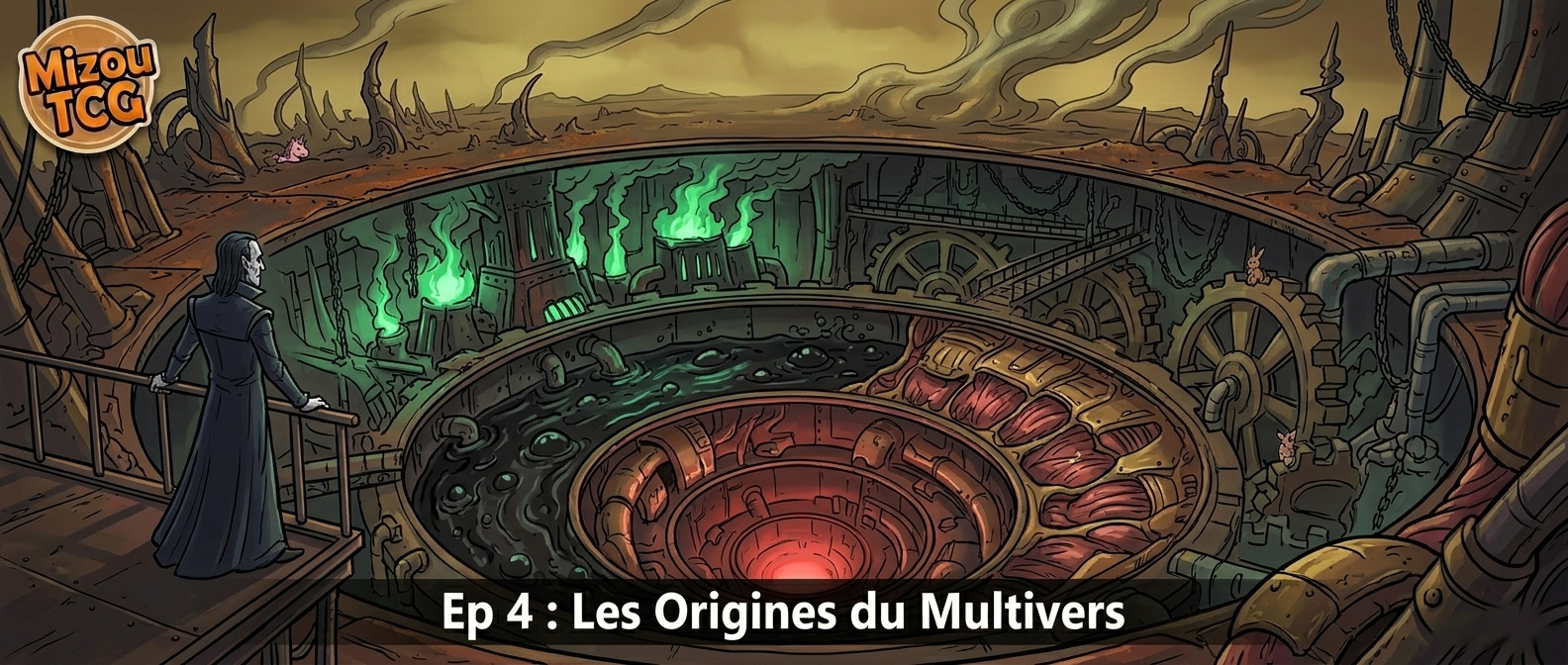
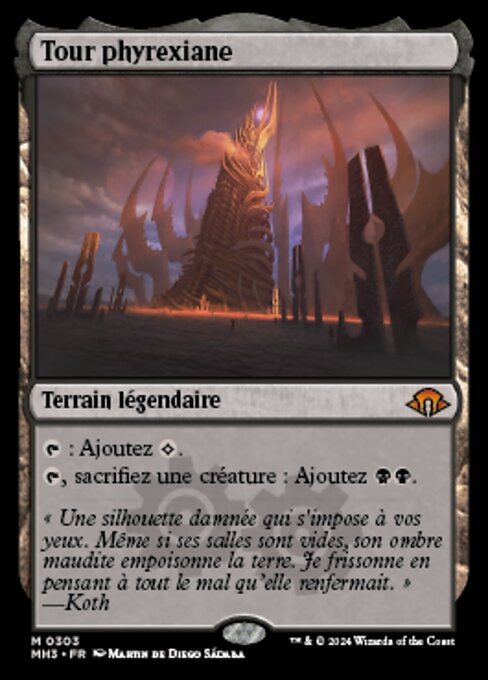
This plane was composed of nine concentric spheres, like the circles of Dante's Hell. Each sphere was a world unto itself: one made of metal, another of decomposing flesh, yet another of boiling black oil. At the center, at the very bottom, was the heart of the plane — a furnace of pure energy.
Yawgmoth contemplated this place and understood that he had found his paradise.
He named it Phyrexia.
The nine spheres of hell
Phyrexia was structured in nine spheres, each with its function:
- First sphere — Artificial surface, imitating a "normal" world to deceive visitors
- Second to Fourth spheres — Industrial zones, forges, and transformation laboratories
- Fifth sphere — The Dross, an ocean of black oil and organic waste
- Sixth sphere — Domain of machine-priests and high officials
- Seventh sphere — Prison and "re-education" zone
- Eighth sphere — Industrial core, where bodies are transformed into machines
- Ninth sphere — The heart of the plane, where Yawgmoth would eventually merge with Phyrexia itself
Yawgmoth began bringing his "cured" patients there — Thran transformed into half-flesh, half-machine beings. On Phyrexia, he could go further in his experiments, without the ethical limitations of Dominaria. The first Phyrexians were born.
As for Dyfed, the one who had given him this gift? Yawgmoth stabbed her mortally. Rebbec, out of pity, delivered the killing blow — but the result was the same: no one knew the way to Yawgmoth's new kingdom anymore.
The fall of the Thran Empire
The truth finally came out. The Thran discovered the horrors of Phyrexia — the experiments, the forced transformations, the tortured bodies of their compatriots. A civil war broke out between Yawgmoth's supporters and those who wanted to stop him.
Glacian, dying of Phthisis but refusing Yawgmoth's "treatment," created weapons to fight the mad physician. Rebbec, torn between her husband and her mentor, finally chose her side — against Yawgmoth.
The war was brief but devastating. Yawgmoth's forces, reinforced by his Phyrexian creations, were too powerful. The Thran Empire collapsed. Millions died. Yawgmoth fled to Phyrexia with his faithful followers and creations.
In a final heroic act, Rebbec sealed the portal between the two worlds. She used the two halves of a Powerstone that Dyfed had cracked during her agony — the stone into which Glacian's soul had been accidentally absorbed. These two halves were named the Mightstone and the Weakstone.
The portal was sealed. Phyrexia was cut off from Dominaria. But Yawgmoth had eternity before him. He bound himself to the heart of Phyrexia, merging with the plane itself, becoming a quasi-divine entity — the Father of Machines. For millennia, he prepared his revenge...
The Brothers' War: the fate of Urza
Millennia passed. The Thran Empire was nothing more than a legend, its ruins buried under layers of history. Until two brothers rediscovered them.
Urza and Mishra were born into a noble family of Dominaria, but their mother died in childbirth and their father entrusted them to different tutors. They reunited years later as apprentice archaeologists, and despite their opposing personalities, developed a rivalry... then a mutual obsession.
These two cards show the brothers at the height of their power:
- Urza (left) — Cold, calculating, obsessed with perfection. Depicted as "Lord High Artificer," undisputed master of artifacts. He saw the world as an equation to solve, people as variables. Brilliant, but incapable of genuine empathy.
- Mishra (right) — Passionate, impulsive, hungry for recognition. "Claimed by Gix" reveals his final corruption: Gix was a Phyrexian demon-praetor who had survived the closing of the portal. He manipulated Mishra for decades, progressively transforming him into a monster.
The discovery of the stones
Trained as archaeologists and artificers, the brothers participated in an expedition to Koilos, the ruins of an ancient Thran site housing the portal to Phyrexia. In the depths, they discovered a secret chamber containing an ancient machine, powered by an enormous Powerstone.
Both brothers, fascinated, touched the stone at the same time. An explosion of mana occurred. When they regained consciousness, the Powerstone was broken in two, and each brother held one half:
- Urza — The Mightstone, which strengthened nearby artifacts
- Mishra — The Weakstone, which drained the strength of what surrounded it
These were the same stones Rebbec had used to seal Phyrexia millennia earlier. Each contained a portion of Glacian's soul. By touching them, the brothers had awakened something ancient... and attracted the attention of forces that had been waiting a very long time.
A total war
What began as a fraternal rivalry degenerated into armed conflict. Urza joined the kingdom of Yotia, Mishra that of Fallaji. Each built increasingly powerful war machines, powered by their respective Powerstone.
The conflict lasted thirty-six years. Armies of golems clashed. Mishra's Dragon Engines ravaged cities. Urza's Avengers retaliated. The continent of Terisiare was turned into a field of ruins.
But the worst was invisible. Throughout all those years, the Phyrexians were infiltrating both sides. Gix, the demon-praetor, had found a way to leave Phyrexia. He whispered in Mishra's ear, offering "improvements," corrupting him progressively.
At the end of the war, Mishra was no longer human. Under his skin, there was nothing left but metal and black oil.
The Sylex Blast
The war culminated on the island of Argoth, the last refuge of wilderness on Terisiare. Both armies faced off there in an apocalyptic final battle.
It was there that Urza discovered the truth. Face to face with his brother, he saw what Mishra had become: a Phyrexian abomination, an assemblage of flesh and metal, a puppet whose strings were pulled by monsters from another world.
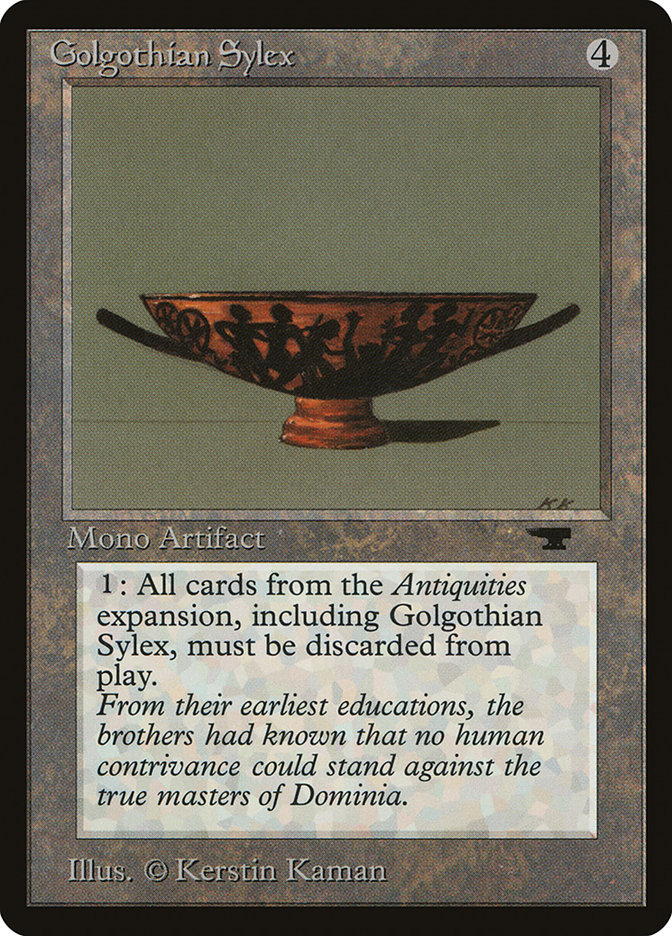
Desperate, broken, Urza did the only thing he could. He activated the Golgothian Sylex, a Thran artifact that no one truly understood.
The explosion was... inconceivable.
- Argoth was vaporized. The island disappeared from the map.
- Both armies were annihilated. Hundreds of thousands dead in an instant.
- Dominaria's climate was shattered. An Ice Age began, which would last several millennia.
- And at the heart of the explosion, Urza's planeswalker spark awakened.
Urza survived — transformed. The Mightstone and the Weakstone had fused with his body, replacing his eyes. He was no longer human. He had become a planeswalker, a being capable of traveling between worlds.
And the first thing he understood, with his new divine senses, was that Phyrexia still existed. That the monsters who had corrupted his brother were merely the vanguard. That the true enemy was biding its time.
Urza's crusade had begun.
The Oldwalkers: mortal gods
Urza was not an ordinary planeswalker. At the time, all planeswalkers were extraordinary. They are called today the Oldwalkers — the ancient walkers — to distinguish them from the far more limited modern planeswalkers.
Oldwalkers were quasi-divine beings, endowed with powers that mortals could not even conceive:
- Immortality — An Oldwalker did not age. Nicol Bolas and Ugin had already been roaming the Multiverse for 20,000 years when Urza awakened his spark.
- Malleable body — Their physical form was merely a projection of their will. They could change appearance, become invisible, or abandon their body to exist as pure consciousness.
- Unlimited powers — The most powerful could create entire planes, manipulate time, resurrect the dead. The planeswalker Serra created her own personal paradise. Urza built time-travel machines.
The extent of their powers was hard to grasp. When Urza was beheaded centuries later by an enemy, his head continued to speak, to think, to plot. As long as an Oldwalker's mind remained intact, he lived. The destruction of their body was merely a temporary inconvenience.
These beings shaped the Multiverse according to their desires. They waged wars that lasted millennia. They played with civilizations like children with ants. And among them, three figures dominated: Nicol Bolas, who manipulated entire empires to increase his power; Ugin, who studied the deepest secrets of existence; and now Urza, consumed by a single obsession — destroying Phyrexia.
Summary: the foundations are laid
At the end of this era, all the elements of Magic's grand story are in place. Titanic forces are about to clash, and their conflicts will define the millennia to come.
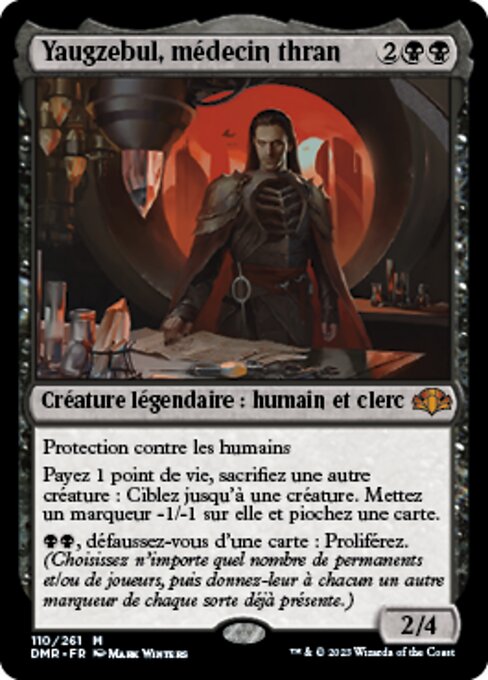
Three figures will dominate the history ahead:
- Nicol Bolas (left) — The dragon-planeswalker, the oldest and most cunning of the Oldwalkers. For millennia, he has been manipulating civilizations and events from the shadows. Every war, every catastrophe, could be one more piece on his grand chessboard. What does he truly want? Absolute power? The destruction of his brother Ugin? Something even more terrible?
- Yawgmoth/Phyrexia (center) — The Father of Machines has merged with his artificial plane. He is no longer a man — he IS Phyrexia. And Phyrexia never sleeps. In the nine spheres of his mechanical hell, legions of half-flesh half-machine monsters are preparing. The invasion of Dominaria is only a matter of time.
- Karn (right) — A glimpse of the future. This silver golem does not yet exist, but he will be created by Urza and will play an absolutely crucial role in the events to come. We will discover him in Episode 2.
And Urza? He has become a planeswalker, but at what price? His brother is dead. His world lies in ruins. And he now knows that an enemy infinitely more dangerous than Mishra waits in the shadows.
His crusade against Phyrexia begins. A crusade that will last centuries, that will take him to the farthest reaches of the Multiverse, and that will force him to make increasingly terrible choices. Because to defeat monsters, Urza is prepared to become one himself...
The war is not over. It is only just beginning.
In the next episode...
Episode 2: The Saga of Urza
Urza travels the Multiverse in search of weapons against Phyrexia. He discovers Serra's Realm, a paradise created by a planeswalker, and accidentally destroys it. He founds the Tolarian Academy, where he experiments with time travel — with catastrophic consequences. And he creates the being who will change everything: Karn, the silver golem, the only creature capable of carrying the Phyrexian germ without being corrupted.
But Urza's methods grow increasingly extreme. How many lives is he prepared to sacrifice? How many worlds is he prepared to destroy? How far will he go to save the Multiverse?
Sources
- The Thran (novel by J. Robert King, 1999) — The complete story of Yawgmoth and the fall of the Thran Empire
- The Brothers' War (novel by Jeff Grubb, 1998) — The detailed account of the war between Urza and Mishra
- The Brothers' War (Magic expansion, 2022) — A modern revisit of these events, with new cards illustrating the key characters
Products related to this episode
Relive this saga with cards from the corresponding expansions:
Products - La Guerre Fratricide