
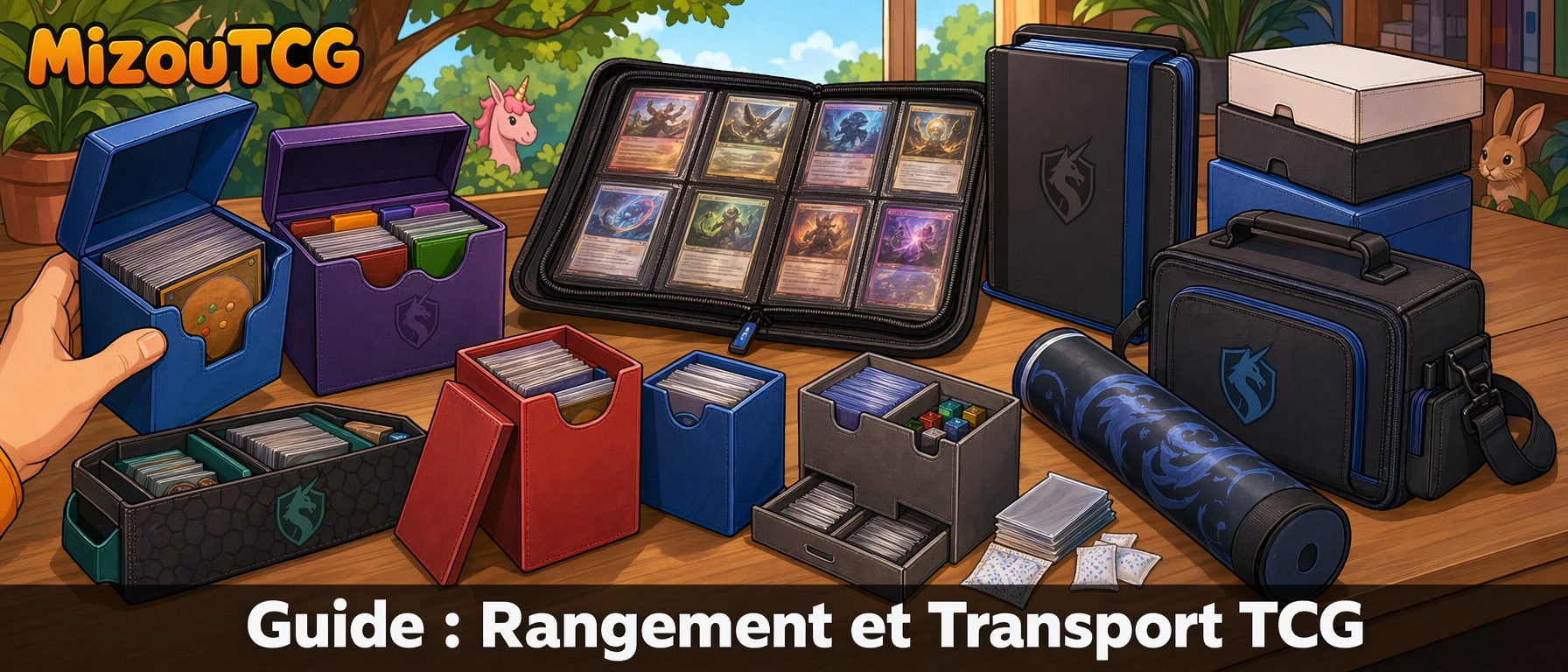
You've just finished your Commander deck, you've finally completed your Magic: The Gathering set collection, or you're getting ready for your first tournament at the local game store: one question always comes up. How do you store and transport your TCG cards without damaging them? Between deck boxes, portfolios, ring binders, premium binders and dedicated carrying bags, the market today is overflowing with options, and it's easy to get lost when starting out — or even when you think you've seen it all.
This pillar guide has a clear purpose: to become your single reference on TCG storage and transport. We cover every solution on the market, real-world use cases (competitive player, collector, casual Sunday gamer), the pitfalls to avoid, and above all the best practices to make sure your cards survive the years without a single scratch. Whether you play Magic (Commander, Standard, Modern), Pokémon, One Piece, Lorcana or Wakfu, the principles stay the same — only the volumes and formats change.
Each section below introduces a sub-topic that you can dive deeper into via our specialized guides. Think of this page as the central hub from which to navigate, and take the time to browse the linked resources: your cards will thank you.
Deck Box: the player's essential companion
Along with sleeves, the deck box is the number one investment for any serious TCG player. It protects your deck from impacts, humidity, dust and especially the daily warping that comes with transport. A sleeved Commander deck (100 cards + tokens) is roughly 9 to 10 cm thick; a sleeved Standard deck (60 cards + 15-card sideboard) sits around 8 cm. Choosing the right deck box means first choosing the right capacity.
The different deck box formats
On the market, there are five main families. The 80-100 card deck boxes (simple, compact) are perfect for sleeved Standard or Modern decks. The 100+ deck boxes (such as Dragon Shield Nest 100 or Ultimate Guard Boulder 100+) are sized for Commander with a bit of headroom. The double deck boxes (200 cards) let you carry two decks or a deck with a large sideboard plus tokens. The premium magnetic deck boxes (Ultimate Guard Sidewinder, Dragon Shield Magic Carpet) feature a rigid magnetic closure and a high-end look. Finally, the multi-deck carrying cases store 4 to 8 decks for competitive players who travel with their entire metagame.
Choosing based on your player profile
A casual player running one deck at the kitchen table with friends will be perfectly served by an entry-level deck box at 5-10€. A regular player who rotates between several Commander decks will benefit from investing in identifiable (different colors) and sturdy deck boxes. The competitive player will favor a dedicated case that protects both the main deck AND the sideboard with a clear organization system. To dig deeper into choosing your model, check out our guide to picking the right deck box, which breaks down selection criteria brand by brand.
Portfolios and binders: storing and showcasing your collection
If the deck box is for playing, the portfolio (or binder) is for collecting. It's the go-to tool for organizing cards outside of decks: valuable singles, foils, promos, set cards kept for their value or aesthetic. A good portfolio must meet three requirements: physically protect the cards (PVC-free pockets, acid-free materials), allow smooth browsing (rigid pages, easy turning), and offer a capacity suited to your collection size.
Fixed-pocket portfolio vs. ring binder with loose-leaf pages
The fixed-pocket portfolio (such as Ultra Pro PRO-Binder or Dragon Shield Card Codex) features sewn or welded pages: you can't add or remove sheets, but the structure is very sturdy and the cards stay perfectly in place. It's the ideal choice for a stable thematic collection (all your cards from one set, your cube, your foils).
The ring binder with loose-leaf pages (ring binder + 9 or 18-card sheets) lets you add, remove and rearrange at will. It's more flexible for an active collector who buys, sells and trades regularly. Beware though: the rings can mark cards if the binder is closed improperly or if the sheets aren't high quality. Always go for side-loading sheets (opening on the side) which prevent cards from falling out during handling.
Capacity and organization: thinking long term
A 9-pocket portfolio holds 360 cards (front and back across 20 pages), a 12-pocket holds about 480, and a premium zip binder can go up to 480-576 slots. For a collection that exceeds 2000 cards, it's better to segment: one portfolio per set or per color (for Magic), one per expansion block (for Pokémon). This organization makes it dramatically easier to find a specific card, especially during a trade or a deck build.
To dig further, our comparison of the best TCG portfolios details the models we recommend and their specific use cases.
Storage sheets and binder pages: the detail that matters
People often think of the big containers — deck boxes, cases, portfolios — and forget about the storage sheets. Yet they're the direct support for your cards, the surface that touches them every day. A poor-quality sheet can damage a sleeved or unsleeved card within months: plastic too rigid that scratches the edge, PVC that yellows the inks long-term, pockets too tight that force the card during removal.
Standard, toploader and specialty pages
The standard 9-pocket sheets (3x3) are the universal format, compatible with all poker-sized TCG cards (63x88 mm sleeved). The 4-pocket sheets (2x2) suit oversized cards (Planechase, Archenemy, certain promos). The 1-pocket toploader sheets are dedicated to high-value cards stored in semi-rigid toploaders: they prevent any movement and any abrasion. Finally, the graded card pages (PSA, Beckett, CGC) come in 1 or 2 slabs per page formats, with dimensions designed for grading slabs.
Top-loading vs. side-loading: the detail that changes everything
This debate is central and deserves to be settled once and for all: always choose side-loading sheets (opening on the side, toward the outside of the binder). With top-loading, cards can slide downward when you handle the binder vertically, and eventually slip completely out of their pocket. With side-loading, gravity works for you: the card stays in place, and there's zero risk of it falling out when opening. It's a seemingly trivial detail that will save you from scratches, losses and stress.
Transport and long-term storage: protecting beyond the game
Transporting your cards from point A to point B — game store, tournament, a friend's place — exposes them to multiple risks: impacts, temperature swings, humidity, pressure inside a backpack. A good player thinks about TCG transport the way a photographer thinks about their gear: with a dedicated, padded, properly sized container.
Dedicated carrying bags and cases
Brands like Ultimate Guard (Ammonite, Twin Flip'n'Tray XenoSkin) or Enhance Gaming offer padded bags with compartments for deck box, playmat, dice, tokens, life pad and accessories. For a full-day Magic tournament, this kind of bag radically changes the experience: everything has its place, nothing gets jumbled together in a regular backpack, and the case absorbs minor impacts. For the playmat in particular, a rigid tube (playmat tube) is essential — a folded or crushed playmat quickly loses its flatness and becomes unpleasant to play on.
Long-term storage: the attic collection is a hard no
For the collection you don't touch every month — valuable singles, complete sets, sealed boosters — storage must be stable in temperature and humidity. Absolutely avoid attics (too hot in summer, condensation in winter), damp basements, and rooms exposed to direct sunlight. The ideal: an indoor closet at stable temperature (18-22°C / 65-72°F) with a humidity level between 40 and 60%. For very high-value cards, consider a moisture absorber pouch (renewable silica gel) in each storage box. Cardboard boxes like BCW or Ultra Pro (550, 800 or 1600-card capacity) remain the reference for large bulk volumes.
The items in this guide
This pillar is paired with several specialized guides that go deeper into each sub-topic. Find all our TCG storage and transport resources below.
TCG Storage & Transport
Pilier rangement : deckbox, portfolios, binders, boites de rangement, mallettes et transport securise des collections.
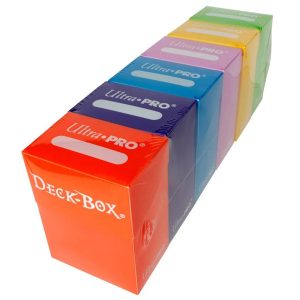
Our selection: recommended deck boxes and portfolios
To help you take action, here's a selection of our top-rated deck boxes, tested and recommended by MizouTCG players.
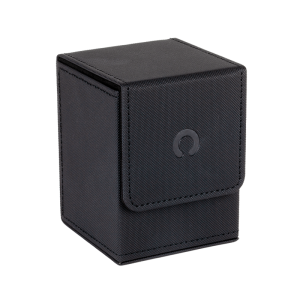
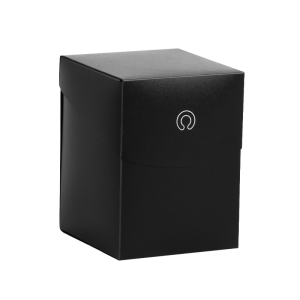
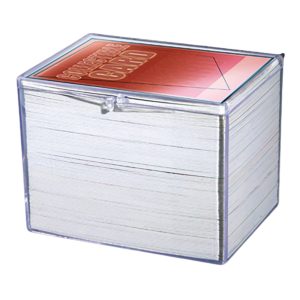
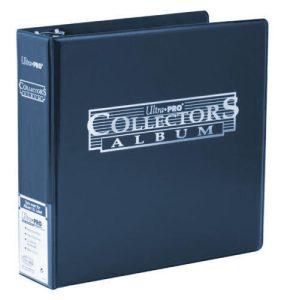
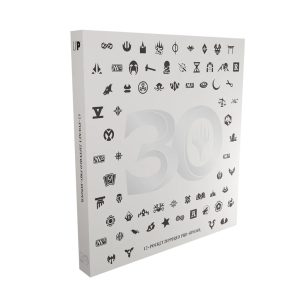
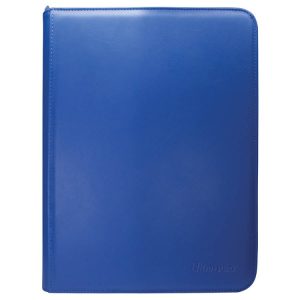
And on the collection storage side, our most popular portfolios and binders:
Common mistakes to avoid with TCG storage
After years of advising players, certain mistakes come back with troubling regularity. Listing them helps avoid them from the start, and saves a lot of regret down the road.
Storing unsleeved cards in a portfolio
This is probably the most common mistake among beginners. Binder sheets, even high-quality ones, are not sleeves: they protect neither against scratches during removal, nor against friction with adjacent pages when turning. For a card worth more than a few euros, the rule is simple: sleeve first, portfolio second. To choose the right protection, refer to our complete TCG sleeves guide.
Mixing foil and non-foil cards in the same pocket
Magic foils (and to a lesser extent Pokémon foils) tend to pringle — to curve — over time, especially when in direct contact with a non-foil card. They can also transfer their glossy finish onto the back of neighboring cards. Ideally, dedicate a binder or section to your foils, with premium sleeves (Dragon Shield Matte for example) that buffer humidity variations.
Transporting a sleeved deck without a deck box
A rubber band around a stack of sleeved cards is the surefire recipe for crumpling the edge of every card along the sides. Even for a quick trip (5 minutes by car), always use a deck box. The cost of an entry-level deck box is 5 to 8 euros, the equivalent of a single low-value common: relative to the price of your deck, it's a no-brainer.
FAQ – Frequently Asked Questions
What's the difference between a portfolio and a TCG binder?
A portfolio is a binder with fixed pockets (sewn or welded pages, non-detachable) that offers a very stable structure. A TCG binder uses rings and loose-leaf sheets, which lets you freely add, remove or rearrange the cards. The portfolio is ideal for a static collection, the binder for a constantly evolving one. Both protect effectively as long as the pockets are good quality (PVC-free, side-loading).
How many cards can a Commander deck box hold?
A deck box rated for 100 cards can typically fit 100 cards sleeved with single sleeves (Dragon Shield Matte for example). If you use double-sleeving (perfect fit + outer), you'll need a deck box rated 133 or 150 cards for the 100 cards of a Commander deck. For a Commander deck with tokens, summoning card, dice and counters, aim instead for a 150+ deck box or a model with a built-in accessory compartment.
Do portfolio sheets damage cards?
A poor-quality sheet — containing PVC, with rigid plastic and sharp edges, or improperly sized — can indeed damage cards (scratches during insertion/removal, slow yellowing, dog-eared corners). Modern sheets from established brands (Ultra Pro Platinum, Dragon Shield, Ultimate Guard) are archival-safe (PVC and acid-free) and side-loading. At equal quality, the risk is virtually zero over 10 years or more.
How to transport a deck without a deck box in an emergency?
If truly no deck box is available, the best backup solution is to place the deck (sleeved) in a wide toploader-style pouch, then in a rigid inner pocket of a backpack. Avoid rubber bands (which mark the sleeves), zip-lock bags (which trap humidity), and pant pockets (pressure, body heat, humidity). But honestly: always keep an entry-level deck box in reserve in your gaming bag, it saves the day in plenty of situations.
What's the ideal humidity for storing Magic cards?
The ideal relative humidity sits between 40% and 60%, with a stable temperature around 18-22°C (65-72°F). Above 65% humidity, cards can warp or develop microscopic mold spots; below 30%, the paper becomes brittle and inks may crack long-term. A digital hygrometer for 10€ and a few renewable silica gel pouches are enough to manage your storage in 99% of cases.
Rigid or soft deck box: which to choose?
The rigid deck box (hard plastic like Ultra Pro Satin Tower, or magnetic like Ultimate Guard Sidewinder) offers the best protection against impacts and crushing, at the cost of greater weight and bulk. The soft deck box (fabric or neoprene pouch) is lighter, quieter when shuffling, but protects less well against side impacts. For a tournament or daily transport, rigid is recommended; for at-home play with friends, soft is more than enough.
Conclusion: invest once, protect for the long haul
TCG storage and transport are not a luxury: they're the infrastructure that allows your passion to last. A deck box at 10€, a portfolio at 20€, a few quality side-loading sheets, and a storage box well placed in a temperate closet: the total investment to secure a collection worth several hundred euros is negligible. Every unscratched card, every uncurled foil, every deck ready to go when it's time to play — that's all the frustration avoided and the enjoyment preserved.
Start with the essentials (a deck box suited to your main format), gradually round it out with a portfolio for your most valuable collection, then add transport accessories once you start frequenting stores and tournaments. At MizouTCG, we select every product with quality-price-durability in mind, and we're always available for any specific advice.
Happy storing, and may your cards keep you company for many more years to come.