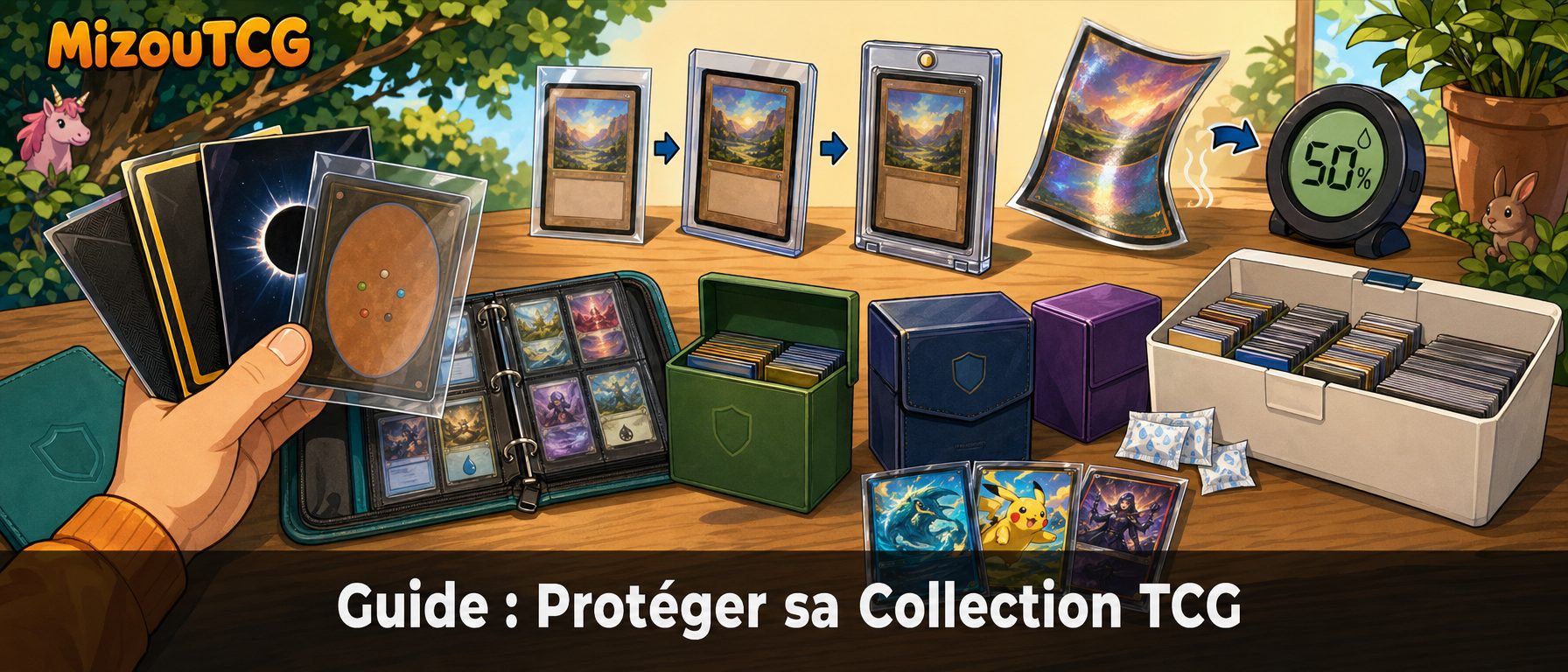
A damaged card loses 30 to 80% of its value. A bent foil ("curling") becomes unsellable in Near Mint grade. And yet, the majority of French Magic, Pokémon, or Lorcana collections still sit in a cardboard box, without sleeves, next to the radiator. This guide is the foundation of your conservation strategy: it details the levels of protection (sleeve, toploader, one-touch), the special case of foils, long-term storage, and the mistakes that silently ruin a collection.
The goal: so that you can open a box in ten years and find your cards in the same condition as today — whether they're worth €2 or €200.
Why protect your TCG collection (and how much it costs not to)
A playing card is not an inert object. The cardboard breathes, the inks react to light, the foil varnish deforms with humidity. Without protection, a collection degrades in stages: micro-scratches, whitened corners, scuffed edges, then irreversible warping. The cost isn't only financial — it's also the frustration of losing a signed card, a promo distributed in a store, or a piece from your first Commander deck.
The three main enemies
- Variable humidity: the worst enemy for foils. A shift from 70% to 30% humidity makes a foil card warp within hours.
- UV light: direct sunlight fades colours, especially reds and blues, within a few months of exposure.
- Mechanical friction: taking a card out of a binder without a sleeve, handling it with greasy fingers, cramming it into an overfull box — every gesture counts.
When to really protect?
Not everyone needs the same level of protection. A common card at €0.10 in a basic sleeve is enough. An €80 chase Collector Booster deserves a toploader with a penny sleeve. A rare card graded or intended for PSA/BGS grading must be in a one-touch or semi-rigid card saver. To know what to protect first, start by assessing the value of your TCG cards: protection must be proportional to the stakes.
The three levels of protection: sleeve, toploader, one-touch
There is a clear hierarchy in card protection. Each level corresponds to a specific use case and budget. Mixing all three is perfectly normal — the same collection can contain cards in simple sleeves, chases in toploaders, and a few major pieces in one-touches.
Level 1: the sleeve, the universal base
The plastic sleeve (66×91 mm for standard cards) is the first barrier against scratches and fingerprints. A Dragon Shield Matte 100ct costs around €12 and protects an entire deck. For valuable cards, a perfect fit (64×89 mm) is often layered inside a classic sleeve: this is the double-sleeve, essential in tournaments and useful for foils. The choice between Matte, Classic, Eclipse, or Art Sleeve depends on feel, shuffle, and aesthetics — all detailed in our Dragon Shield vs Ultra Pro vs KMC: Sleeve Comparison.
Level 2: the toploader, for valuable cards
The toploader is a rigid PVC case, standard format 3"×4" (approximately 76×102 mm), which holds a sleeved card. It's the classic solution for storing a card worth between €5 and €100: protection against bending, possibility of postal shipping, clean presentation during a resale. Absolute rule: always put the card in a penny sleeve before the toploader. Without a sleeve, the card slides, gets scratched, and the PVC can mark the varnish over time.
Level 3: the magnetic one-touch
The Ultra Pro one-touch (and equivalents) is a magnetic acrylic case with UV protection. Ideal for cards worth more than €50, promos, signed cards, or cards intended for display. It comes in several thicknesses, measured in pt (points):
- 35 pt: standard card (Magic, Pokémon, classic Lorcana)
- 55-75 pt: card with a thick sleeve, or slightly thicker "relic" card
- 100-180 pt: very thick cards (jerseys, patches, certain promos)
- 260-360 pt: for sealed boosters or very thick objects
The one-touch is not essential for everything — reserve it for pieces you truly want to display or preserve in optimal conditions.
The special case of foils: why your shiny cards warp
"Curling" (or pringling) is the number one enemy of foil collectors. The cause is mechanical: a foil card is composed of two superimposed layers — classic cardboard on one side, a thin metalised layer on the other. These two materials do not react to ambient humidity in the same way. When the air dries out, the cardboard contracts faster than the foil layer, which curves the card. The phenomenon is particularly visible on Magic foils from before 2020 and on certain Japanese Pokémon cards.
Anti-curling strategy
Three complementary levers work:
- Stable humidity: aim for 45-55% relative humidity in the storage room. A basic €8 hygrometer is enough to monitor it. Avoid rooms where cooking takes place, damp basements, and poorly ventilated bedrooms.
- Systematic double-sleeving: the internal perfect-fit mechanically stabilises the card and limits deformation. It's the most effective measure.
- Flat storage under light pressure: a foil card stored vertically in a loose binder deforms faster than a card packed flat in a well-filled storage box.
What to do with an already-warped card?
A slightly warped foil card can sometimes be "straightened" by placing it flat between two toploaders, under a heavy book, in a room with stable humidity, for 1 to 2 weeks. Extreme cases are unrecoverable. Never heat a card (hairdryer, radiator), never put it under a very heavy weight (the foil will crack). For truly precious cards that are starting to deform, placing them in a one-touch with desiccant is the best option.
Long-term storage: the room, the box, the binder
Good individual protection is useless if the storage room is bad. Before investing in premium accessories, identify the most stable spot in your home.
Ideal conditions
- Temperature: 18-22°C, without sudden variation. Avoid attics (scorching in summer, cold in winter) and rooms with direct radiators.
- Humidity: 45-55%. Below this, cards become brittle; above, risk of mould and intense curling.
- Light: no direct sunlight. A bookcase in a shaded room is perfect; a shelf facing a south-facing window is to be avoided.
- Stability: no repeated moving, no frequent transport — each handling is a risk.
Boxes vs binders: which to choose?
Rigid storage boxes (BCW, Ultra Pro, 800ct, 1600ct, 3200ct format) are ideal for bulk: commons, uncommons, bulk rares. Cards stay flat, in the dark, at stable humidity. It's the most durable solution for 80% of a collection.
Binders are better for consultation and showcasing: Commander decks, a complete set collection, signed cards. Always prefer side-loading binders: top-loading pockets let cards slide, fall out, and rub against the edge — a classic of collections damaged without anyone noticing.
For details on choosing between deck boxes, portfolio binders, and transport solutions, see our complete TCG storage and transport guide. For purely organising a large collection (by colour, by set, by value), see how to organise your TCG card collection.
Essential materials to get started
No need to buy everything at once. A good base configuration, for a collection of 1,000 to 3,000 cards with a few valuable pieces, is:
- 2 to 3 packs of Matte sleeves (Dragon Shield or Ultra Pro Eclipse) — approximately €25-35 to sleeve your main decks
- 1 pack of penny sleeves (100 units, €2-3) for cards in toploaders
- 10 to 20 toploaders (35 pt standard) — approximately €5-10
- 2 to 3 one-touch 35 pt for major pieces — approximately €10-15
- 1 storage box 800ct or 1600ct — approximately €8-15
- 1 side-loading 9-pocket binder for the display collection — approximately €20-30
Total: €70 to €120 for serious protection of your entire collection. For sleeves, Dragon Shield Matte and Ultra Pro Eclipse remain the most widely available French references.
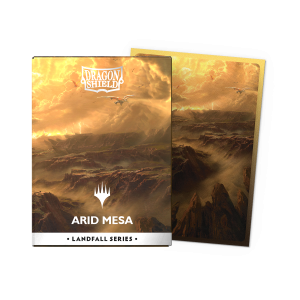
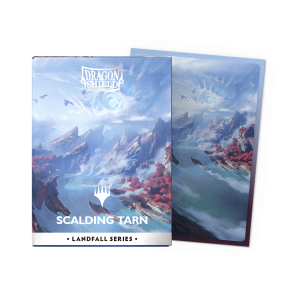
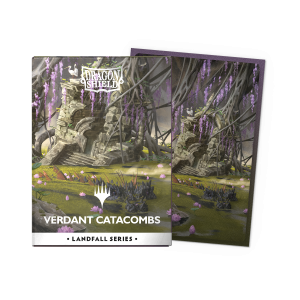
Our Dragon Shield sleeve selection:

Articles in this guide
This page is the entry point for the Protection & Conservation pillar. To go further on each sub-topic — precise sleeve selection, valuation, the double-sleeve technique, long-term storage — explore the dedicated guides below.
Protection & Conservation
Pilier conservation longue duree : toploaders, card savers, semi-rigides, grading, humidite, UV et archivage de cartes de valeur.
FAQ – Frequently asked questions
Should you sleeve all your cards, even commons?
No, that would be unnecessary and costly. Systematically sleeve your playing decks (all cards, including commons, to homogenise the shuffle and avoid marking), your cards worth more than €1-2, and everything that regularly passes through hands. Bulk commons can stay in a storage box without sleeves, provided they're flat and sheltered.
Can an already-warped foil card be repaired?
A slight warp can often be reduced by placing the card flat between two toploaders, under a book, in a room with stable humidity (45-55%), for one to two weeks. A pronounced warp is irreversible — which is why preventive double-sleeving and flat storage from the moment of purchase are so important. Never use heat, which will crack the foil layer.
Toploader or one-touch: which to choose for a €50 card?
Both work. The toploader (with mandatory penny sleeve) is cheaper (€0.30-0.50 each) and sufficient for storage and shipping. The magnetic one-touch (€3-6 each) adds UV protection, better humidity resistance, premium presentation, and an anti-loss system (the card never falls out). For a card you want to display or keep for a very long time, the one-touch is worth the investment.
What thickness of one-touch for a standard Magic or Pokémon card?
35 pt is the base thickness, designed for a standard card without a sleeve. If you put the card in a penny sleeve before the one-touch (recommended), the 35 pt remains compatible but becomes tight — 55 pt is more comfortable. Beyond that (75, 100, 130 pt), it's reserved for specific thick cards (jerseys, relics, certain reinforced promo cards).
Do binders damage cards?
Cheap top-loading binders, yes — cards slide, fall out, and rub against the rigid plastic pockets. Quality side-loading binders (Vault X, Ultra Pro Pro-Binder, Dragon Shield Card Codex) are on the contrary excellent: the card stays in place, the lateral opening prevents falls, and PVC-free pockets avoid plasticizer migration. For a display collection, it's the best solution.
What humidity level to aim for, and how to measure it?
Aim for 45-55% relative humidity. A basic digital hygrometer (€8-15) placed near your storage is more than sufficient. If you live in a humid region (Atlantic coast) or heat strongly in winter (very dry air), consider a dehumidifier or humidifier in the relevant room. Silica gel sachets in boxes can complement, but don't replace good room ventilation.
In summary
Protecting a TCG collection means combining three things: the right individual barrier (sleeve / toploader / one-touch depending on value), the right storage (rigid box or side-loading binder), and the right room (stable humidity, no sunlight, no thermal variation). None of these three elements compensates for the other two: a card in a one-touch in a damp attic will end up warped, and a bulk box in a perfect cupboard remains vulnerable to the slightest knock.
Start with the simplest: sleeve your decks, isolate your valuable pieces, move your storage out of a risky room. The rest follows. To move to the next step, browse our ultimate TCG sleeves guide or explore our catalogue of Ultra Pro and Dragon Shield protection accessories directly.
Products recommandés