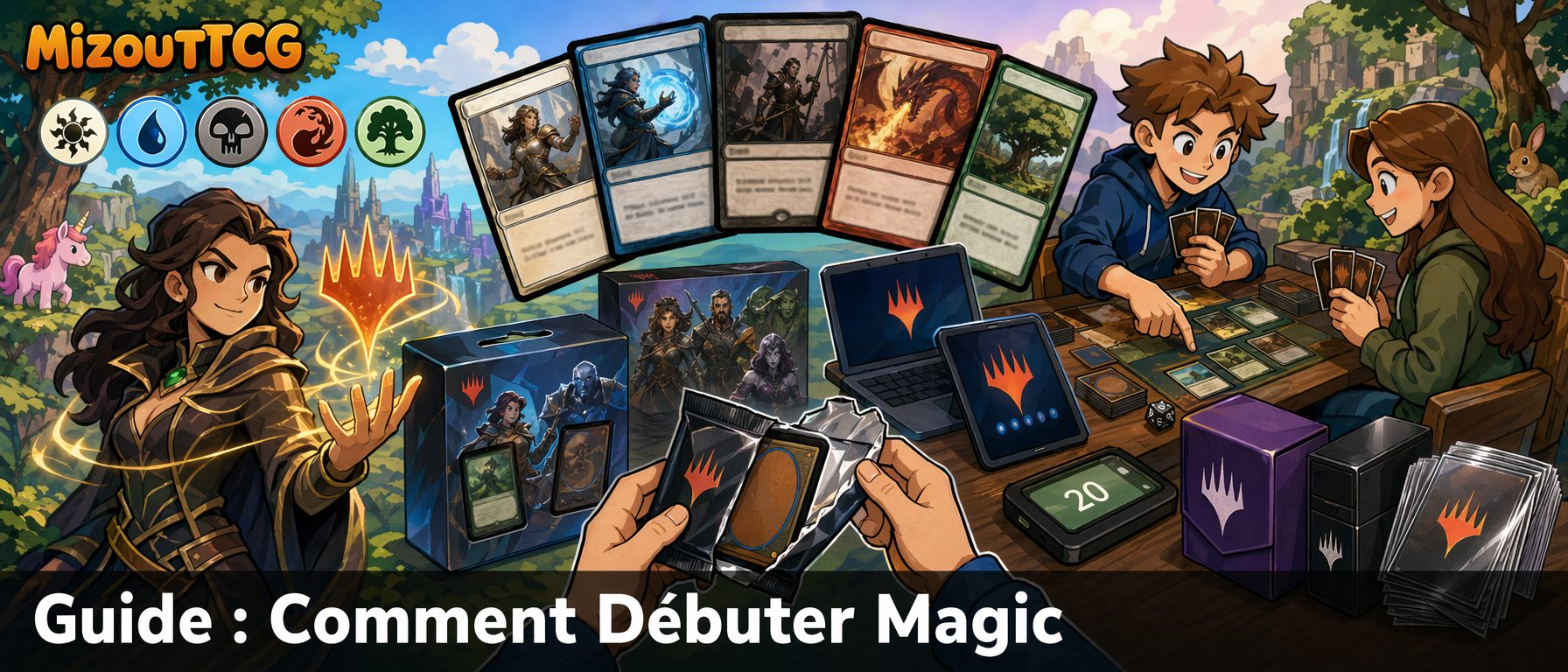
You have heard about Magic: The Gathering, the most popular trading card game in the world, and you want to get started? Excellent choice! With more than 30 years of history and a global community of millions of players, Magic offers unmatched strategic depth.
But where do you begin when discovering a game with more than 27,000 different cards? This guide walks you through every step, from your first purchase to your first game.
What is Magic: The Gathering?
Magic: The Gathering (MTG) is a trading card game (TCG) created by Richard Garfield and published by Wizards of the Coast since 1993. It is the very first TCG in history — the one that invented the genre.
How the game works
Two players (or more) face off with decks of cards they have built. Each player starts with 20 life points and the goal is to reduce the opponent's life points to zero.
Card types:
- Lands: Produce mana, the resource used to play your other cards
- Creatures: Attack and defend
- Spells: One-time effects (sorceries) or instant effects
- Enchantments: Permanent effects on the game
- Artifacts: Magical objects with various effects
- Planeswalkers: Powerful allies with multiple abilities
The 5 colors of mana
Magic uses a system of 5 colors, each with its own philosophy and play style:
- White (W): Order, protection, creatures in numbers, life gain
- Blue (U): Knowledge, control, counterspells, card draw
- Black (B): Power, death, destruction, sacrifice for advantage
- Red (R): Chaos, fire, aggression, direct damage
- Green (G): Nature, growth, big creatures, mana acceleration
Decks can be mono-color or combine several colors to benefit from their synergies.
Where to start: products for beginners
Wizards of the Coast offers several products designed specifically for new players. The Starter Kit Foundations is our current recommendation.
The Starter Kit (recommended)
This is THE ideal product for two beginners. The Starter Kit contains:
- 2 ready-to-play 60-card decks
- 2 exclusive foil cards
- A learning guide
- A code for MTG Arena (digital version)
Price: Around 15-20€
Why it's ideal: You can play immediately with a friend or family. The decks are balanced against each other.
Jumpstart Boosters
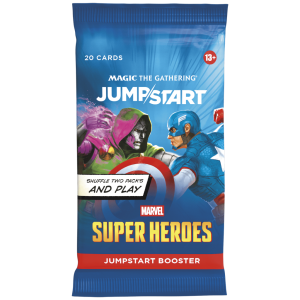
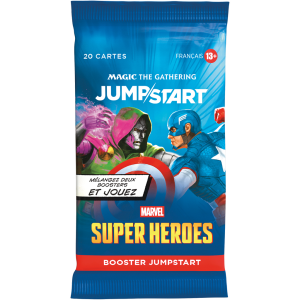
A fun alternative: Jumpstart Boosters each contain a themed half-deck of 20 cards. Shuffle 2 boosters together = 1 playable 40-card deck!
Advantages:
- Discover different themes and mechanics
- Replayability: every combination gives a different deck
- No need to know deck-building rules
Commander Decks (for later)
The Commander format is the most popular in Magic, but wait until you understand the basics before diving in. Pre-built Commander decks are excellent but contain more complex mechanics.
Learning the rules
Magic may seem complex at first, but the basic rules can be learned in an hour.
Free resources to learn
- MTG Arena (free): The official video game with an excellent interactive tutorial
- Official basic rules: On the Wizards of the Coast website
- YouTube: Many content creators explain the rules
- Your local game store: Game shops often organize introductory events
How a turn works
Each turn unfolds in phases:
- Untap: Untap your tapped cards
- Upkeep: Certain effects trigger
- Draw: Draw a card
- Main Phase 1: Play lands, creatures, spells
- Combat: Attack with your creatures
- Main Phase 2: Continue playing cards
- End Step: Discard if you have more than 7 cards
The best way is to play a few games to internalize these phases naturally.
The different game formats
Magic offers several ways to play, called formats. Each format has its own deck construction rules.
Formats for beginners
| Format | Deck size | Description |
|---|---|---|
| Standard | 60 cards | Cards from the last 2-3 years only |
| Jumpstart | 40 cards | 2 Jumpstart boosters shuffled together |
| Commander | 100 cards | Very popular casual multiplayer format |
Limited formats (with boosters)
- Draft: Each player opens 3 boosters and picks cards in turn
- Sealed: Each player builds a deck from 6 boosters
These formats are excellent for playing with new cards without an existing collection.
Building your first deck
Once you have the basics down, you will want to build your own deck. Here are the fundamental rules.
The 60-card rule
A Standard deck contains a minimum of 60 cards. In practice, stay at exactly 60 to maximize your chances of drawing your best cards.
The recommended basic structure
- 24 lands: The mana base (adjust according to your curve)
- 24-28 creatures: Your fighting force
- 8-12 spells: Support, removal, card draw
The mana curve
Distribute your cards by mana cost to have options on every turn:
- A few 1-mana cards
- More 2-3 mana cards (the core of your deck)
- A few powerful 4-5+ mana cards
Protecting your cards from day one
Magic cards can gain value. Protect them from the start with sleeves (card protectors).
Why sleeve your cards?
- Protection against scratches and wear
- Better deck shuffling
- Preserving card value
- Hygiene (no direct contact with hands)
Sleeves for beginners
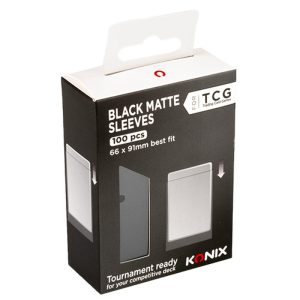
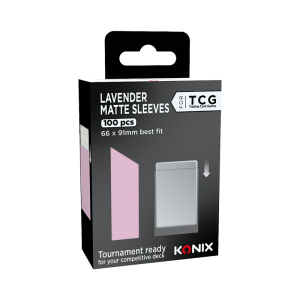
For a first deck, basic sleeves are sufficient. Budget 1.50€ to 3€ for 100 sleeves. Later, you can invest in premium sleeves — see our Dragon Shield vs Ultra Pro vs KMC: Sleeve Comparison to choose.
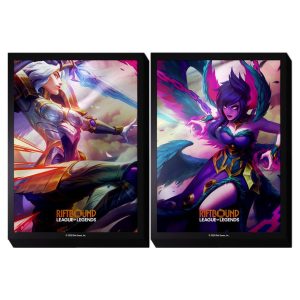
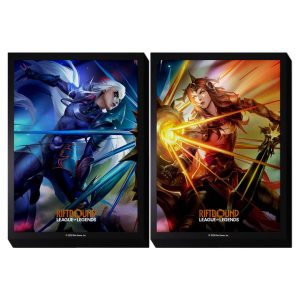
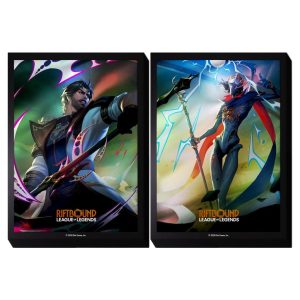
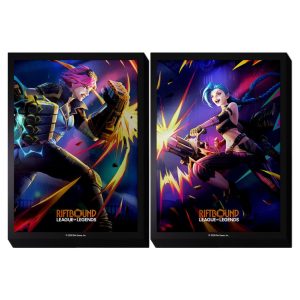
Our sleeves to protect your cards
Where to play?
Magic can be played anywhere: at home, in a game store, online...
In a game store
Game stores regularly organize:
- Friday Night Magic (FNM): Casual tournaments on Friday evenings
- Prereleases: Play new expansions before they release
- Commander nights: Relaxed multiplayer games
Online
- MTG Arena: Free, ideal for learning and playing quickly
- Magic Online (MTGO): Full version but paid
- Spelltable: Play paper Magic via webcam with players worldwide
Budget: how much does it cost?
Magic can be played at any budget.
To get started (20-50€)
- 1 Starter Kit: ~20€
- 100 basic sleeves: ~3€
- 1 deck box: ~5€
- Total: ~30€ to play immediately
For a more complete start, a Magic Bundle (~40-50€) adds 9 boosters, lands and a spin-down die — ideal for quickly expanding your collection.
To improve (50-150€)
- Single cards to upgrade your deck
- Participation in local game store tournaments
- A few boosters for fun
Regular player (150€+/year)
- Keeping up with new expansions
- Multiple competitive decks
- Premium accessories
Tip: Buy cards individually rather than opening boosters for specific cards. It is almost always more economical. If you still want to open boosters, check our guide Play Booster vs Collector Booster to choose the right format.
FAQ – Frequently asked questions
Is Magic hard to learn?
The basic rules are simple and can be learned in 1-2 hours. The complexity comes from the diversity of cards and their interactions. The MTG Arena tutorial is excellent for easing in gently.
Can I play alone to start?
Yes! MTG Arena lets you play for free against the computer or other players online. It is perfect for learning at your own pace.
Can old cards still be played?
It depends on the format. In Standard, only recent cards are legal. In Commander or Legacy, almost all cards are playable. Check legality on sites like Scryfall.
How many cards do I need to buy to start?
A Starter Kit is enough for your first games. You do not need a collection: start small and grow gradually according to your interests.
Are boosters a good investment?
For the fun of opening, yes. To build a specific deck, no: buy the cards individually. Boosters are perfect for Draft or as a gift.
Which color to choose to start?
Choose the color that matches your preferred play style: aggressive (red), control (blue), balanced (white/green), or devious (black). Try them all in MTG Arena to find your favorite!
Conclusion
Magic: The Gathering is an incredibly rich game that can accompany you for years. The key to a good start:
- Start simple: Starter Kit or Jumpstart
- Learn by playing: MTG Arena or with friends
- Protect your cards: Sleeves from day one
- Join the community: Local game stores, Discord, forums
Welcome to the world of Magic! And if you have questions, the MizouTCG team is here to help.
All our Magic: The Gathering products