Magic: The Gathering Sets: Types, Contents, and Which Product to Choose
Topic: set magic the gatheringA Magic "set" is where everything begins: every new release brings its own cards, mechanics, and product lineup. This page untangles what a set really is, how to tell it apart from an edition or an expansion, and which product to open first — all illustrated by a recent release that's fully in stock.
- Set, edition, expansion: the three words sorted out once and for all
- Play Boosters, Collector, Jumpstart, display, Commander decks: what's in each one
- The right product for your profile: curious newcomer, player, collector, or total beginner
What is a Magic: The Gathering set?
In Magic: The Gathering, a set (also called an "edition") is a group of cards released together by Wizards of the Coast, the game's publisher. Each set has a name, a three-letter code, its own expansion symbol, and a clearly defined card list.
A set introduces its own mechanics, setting, and artwork. It's the unit the entire game revolves around: you draft a set, you chase its rare cards, and tournament formats decide which ones are legal. Databases like Scryfall and the MTG Wiki (mtg.fandom.com) catalog every set card by card, with its code and release date.
Set, edition, expansion: what's the difference?
In practice, these three words most often refer to the same thing. "Set" is the official term Wizards of the Coast uses. "Edition" is the older, traditional label — the game once spoke of a "base edition." "Expansion" originally referred to the series that were added on top of a base set.
That historical distinction has faded. Today, the vast majority of sets are standalone: they no longer complete a base edition, they stand on their own. So "set" has become the catch-all term, while "edition" and "expansion" have turned into everyday synonyms in player lingo.
| Term | Origin | What it means today |
|---|---|---|
| Set | The official term from Wizards of the Coast | The standard word, used everywhere |
| Edition | Older, traditional label | Synonym for set |
| Expansion | Older term for add-on series | Synonym for set in everyday use |
On a product page, the "expansion" listed simply refers to the set the booster or card comes from. There's no technical difference to hunt for: it's the same concept under three labels.
Types of sets: Standard, Commander, Universes Beyond, and special editions
Not all sets are alike. They fall into a few broad families, each designed for a specific purpose:
- Standard expansion sets — the "premium" releases that feed Standard, the go-to tournament format for recent cards. These are what set the pace of the year.
- Commander sets and decks — built for Commander, the most popular multiplayer format. EDHREC tracks the most-played cards and helps gauge how popular a commander is.
- Universes Beyond sets — collaborations with worlds outside Magic, like Marvel Super Heroes. The cards remain 100% playable under the usual rules.
- Special editions — Secret Lair, reprint sets, and other collectible products, often outside the Standard cycle.
Standard isn't set in stone. Every fall, Standard rotation drops the oldest sets from the format — cards stay legal for roughly three years. Outside worlds are also taking up more and more space: we break down what a release like Marvel Super Heroes changes in our look at the 4-color commanders it brings.
What's in a set: boosters, displays, and Commander decks
A set is more than a list of cards: it comes in several products, each designed for a different need. Understanding these formats saves you from buying the wrong thing.
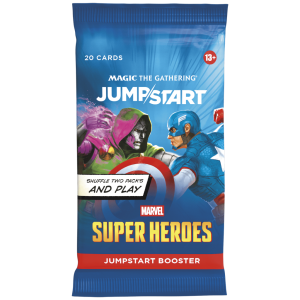
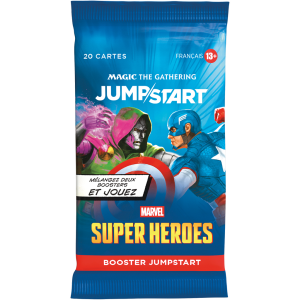
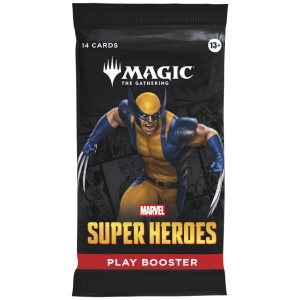
The Play Booster has been the standardized format since 2024: fourteen cards that work equally well for playing and drafting. The Collector Booster targets collectors, with around fifteen premium cards, foils, and alternate-art versions. Some sets also offer Jumpstart boosters, half-decks ready to shuffle together.
The display is the box that holds the boosters: thirty for a Play Booster display (usually twelve for a Collector display). Finally, the Commander deck is a ready-to-play 100-card deck that requires no building at all. To compare these formats in detail and figure out which booster to choose, each type follows its own pricing logic.
| Product | Contents | Best for | Price range |
|---|---|---|---|
| Play Booster | 14 cards, all rarities | Exploring a set, playing, drafting | Affordable |
| Collector Booster | ~15 premium cards, foils & alternate arts | Collectors | Premium |
| Jumpstart Booster | Themed half-deck, ready to play | Total beginners, quick games | Affordable |
| Display | 30 Play Boosters | Drafting with friends, opening in bulk | Mid-range to premium |
| Commander deck | Ready-to-play 100-card deck | Playing Commander without deckbuilding | Mid-range |
How many sets come out each year, and how to follow the schedule
Wizards of the Coast releases on a steady cadence: expect roughly six to seven major releases per year. In 2026, seven sets pace the year, spread across Standard expansions, Commander products, and Universes Beyond sets. On top of that come one-off products like Secret Lair drops.
That regularity has a recognizable rhythm. Every release sparks a wave of preorders, demand peaks in the final quarter around the holidays, and the fall rotation reshuffles which sets are legal in Standard. So you don't miss a thing, our 2026 Magic calendar lays out all seven sets of the year and their release windows.
Which product should you choose to explore a new set?
The best product mostly depends on your goal. Here's how to approach a new release based on your profile:
- Just curious, small budget — a few single Play Boosters are enough to sample the set's world and mechanics.
- Total beginner, eager to play right away — a Jumpstart booster (two are enough to build a deck) or a preconstructed Commander deck lets you play without building anything.
- Playing and drafting with friends — a Play Booster display, with its thirty boosters, covers a draft for up to eight players.
- Collector — the Collector Booster packs in the nicest versions of the cards, led by foils and alternate arts.
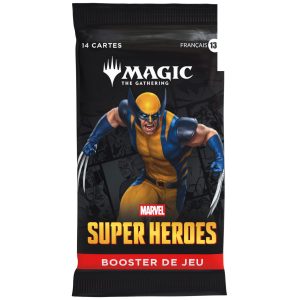
A recent set that's fully in stock is always a good entry point. Marvel Super Heroes, a Universes Beyond set, is a great example of this: it comes in Play Boosters, Collector, Jumpstart, display, and even the "Avengers, Assemble" Commander deck — enough to pick exactly what fits your budget and how much you want to play.
If Magic is brand new to you, it's better to start with a ready-to-play product than with a stack of boosters: our advice on how to get started with Magic: The Gathering walks you through it step by step, without getting overwhelmed.
Our selection
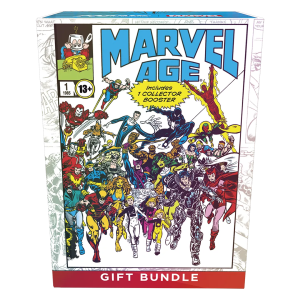
Here's a selection of Magic products currently in stock to explore a set: single boosters to test the waters, displays to open in bulk, and ready-to-play Commander decks.
Our Selection
FAQ — Magic: The Gathering sets
What is a set in Magic: The Gathering?
A set is a group of Magic cards released together by Wizards of the Coast, with a name, a three-letter code, and its own mechanics. It's the basic unit around which boosters, displays, and decks are released. The word "edition" is also used as a synonym.
What's the difference between a Magic set, edition, and expansion?
In everyday use, the three words overlap. "Set" is the official English term, "edition" is the traditional label, and "expansion" historically referred to a series added to a base set. Today, most sets are standalone, and "set" serves as the catch-all term.
How many Magic sets come out each year?
Wizards of the Coast releases about six to seven major sets per year, on a steady cadence. In 2026, seven sets pace the calendar. On top of that come one-off products like Secret Lair drops, outside the main cycle.
What are the different types of Magic sets (Standard, Commander, Universes Beyond)?
There are Standard expansion sets (which feed the Standard format and rotate each fall), Commander products (preconstructed decks for the multiplayer format), Universes Beyond sets (collaborations with outside worlds), and special collectible editions. Each family serves a different purpose.
What's in a Magic set: boosters, display, or Commander decks?
A set comes in several products: Play Boosters (14 cards), premium Collector Boosters, sometimes Jumpstart boosters, displays (30 boosters), and ready-to-play 100-card Commander decks. Each format answers a need: playing, drafting, collecting, or getting started.
What is a Universes Beyond set like Marvel Super Heroes?
Universes Beyond covers the Magic sets that draw on worlds outside the game. Marvel Super Heroes is one example: the set adapts Marvel heroes into Magic cards, with its boosters, Collector, Jumpstart, displays, and Commander decks like "Avengers, Assemble." The rules are still Magic's.
Should you buy a display or single boosters for a new set?
To simply get a taste of a set, a few single boosters are enough. A display (30 boosters) becomes worthwhile for drafting with friends or opening in bulk, since the per-booster price is better. For nice cards, reach for the Collector Booster rather than tearing through displays.
Which Magic set should you choose as a beginner?
To get started, go for a ready-to-play product rather than a flood of boosters. A Jumpstart booster (two are enough to build a deck) or a preconstructed Commander deck lets you play right away, with no building. A recent, in-stock set like Marvel Super Heroes makes a good entry point.
In short, a set is the building block of Magic: understanding its types (Standard, Commander, Universes Beyond) and products (boosters, display, Commander decks) is enough to buy with confidence. The easiest way to jump in is to start from a recent set that's fully in stock, then adjust to your player profile.
Ready to go from theory to the table? Browse the Magic sets and products in stock and find the one that matches how you like to play.
See the full Magic catalog